Religious Importance & Legends
नरो न पापैर्लिप्येत मनोवाक्कायसम्भवैः॥
The Kaal Bhairav Temple is one of the oldest and most fearsome spiritual powerhouses in Varanasi (Kashi). Dedicated to Lord Bhairav—the fierce manifestation of Lord Shiva—he is depicted wearing a garland of skulls, holding a trident, and flanked by his divine vehicle, a black dog.
According to ancient texts like the Kashi Khanda, Lord Shiva created Bhairav out of his immense rage to sever the fifth head of Lord Brahma, which had grown proud. After incurring the sin of Brahmanahatya (killing a scholar), Bhairav wandered the worlds until he entered Varanasi, where the severed head dropped at Kapal Mochan Teerth, completely purifying him. Shiva then decreed that Bhairav would stay eternally in Kashi to protect the holy city and cleanse the sins of all true devotees.
काशीराजगलादिनाथममलं श्रीकालभैरवं भजे॥
"I worship Sri Kaal Bhairav, the stainless, supreme lord and ruler of the sacred city of Kashi, who dispels the fear of time and grants liberation." — Adi Shankaracharya
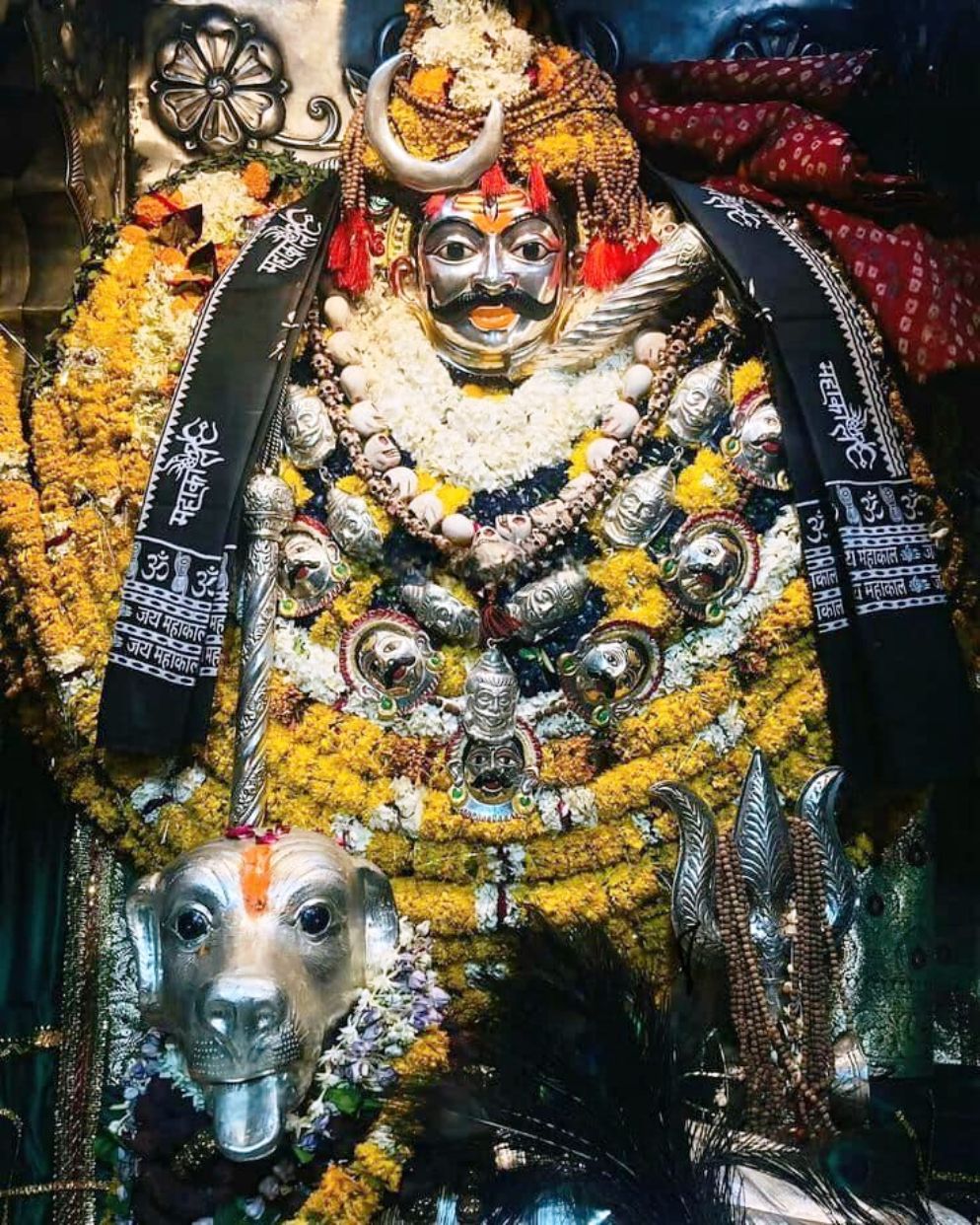
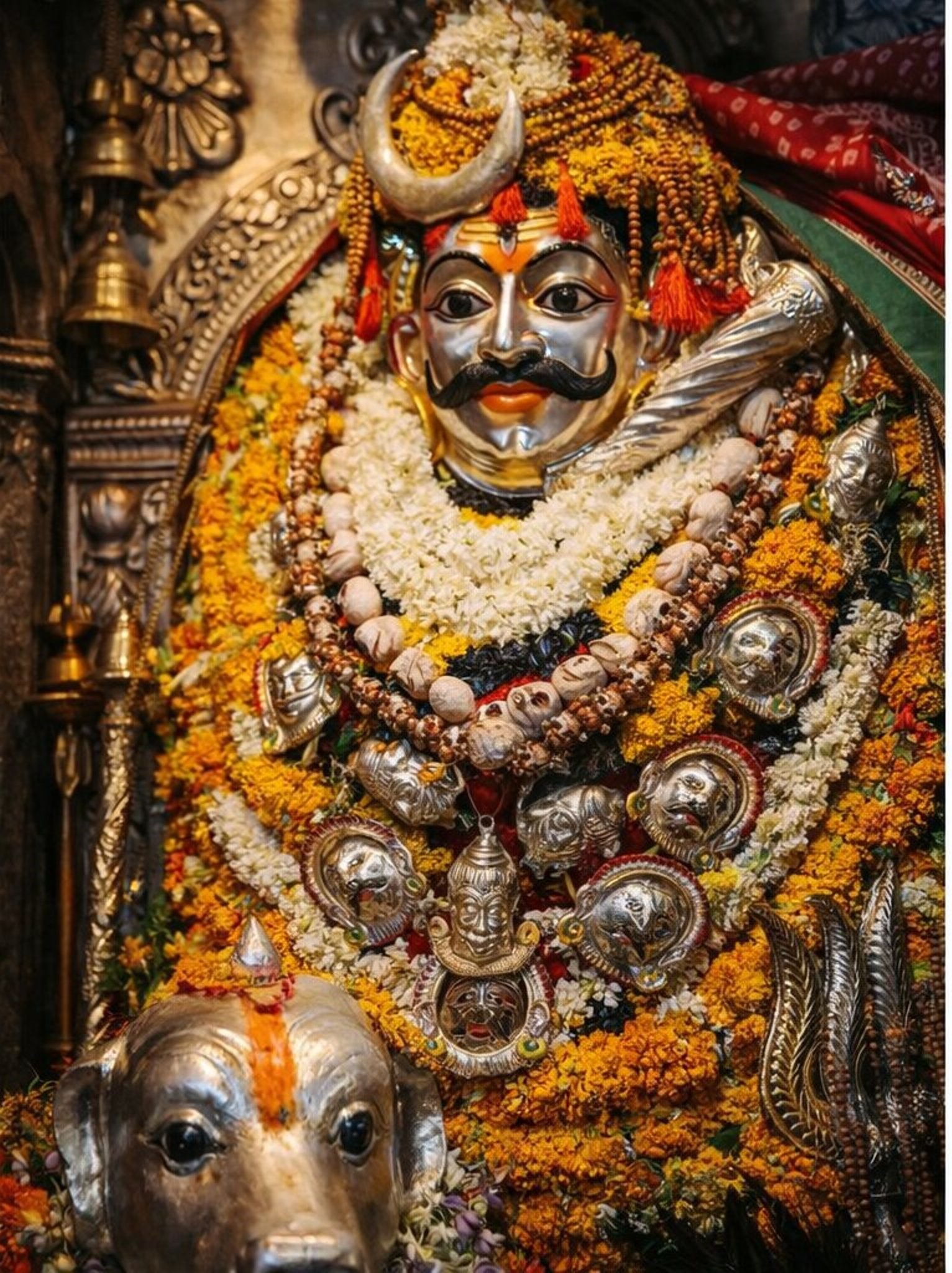
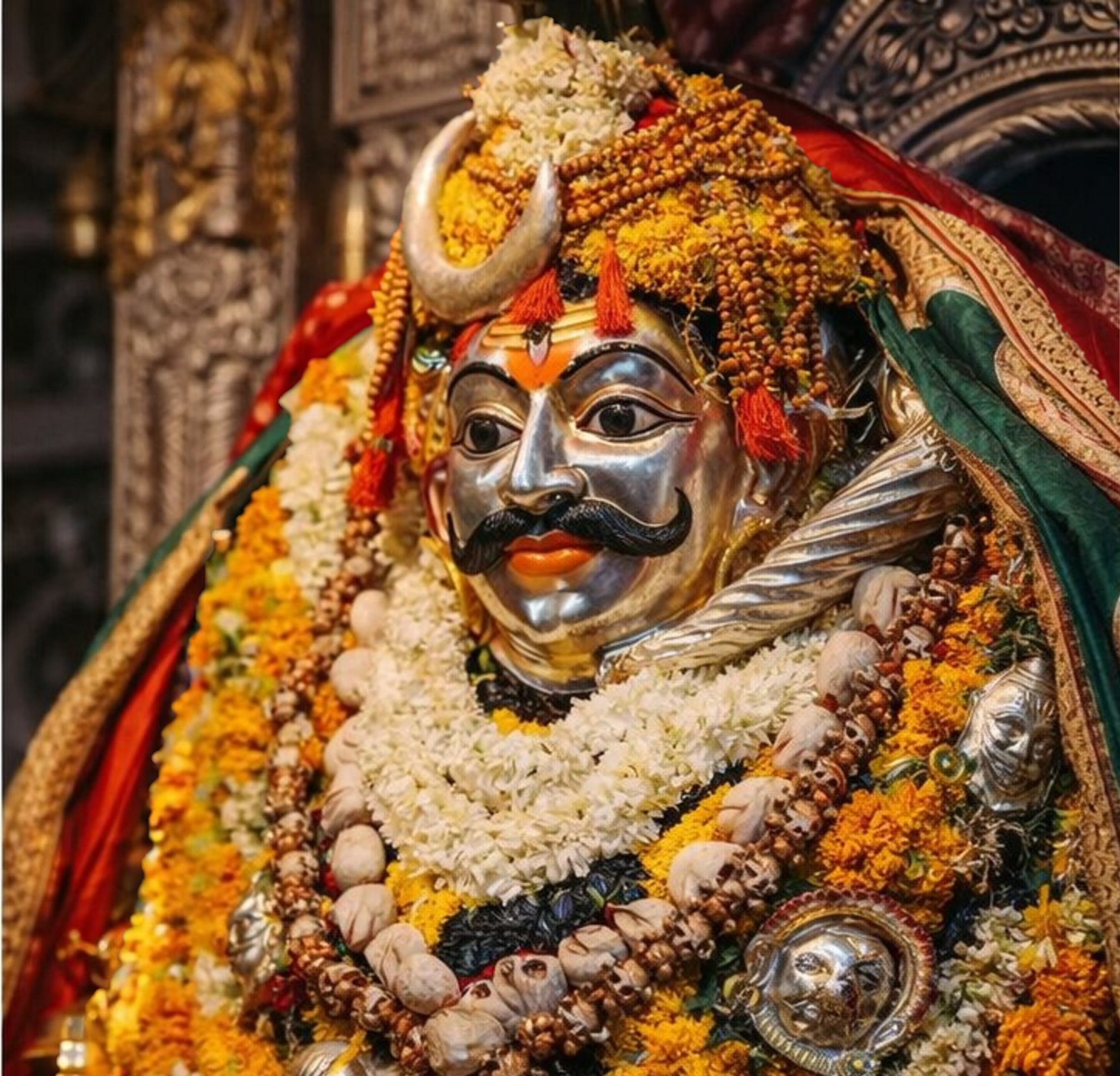
The Kashi Kotwal (The Celestial Police Chief)
In Varanasi’s living spiritual tradition, Kaal Bhairav is not just worshipped as an abstract deity; he is revered as the active "Kotwal" (Chief of Police/Governor) of Kashi. It is strongly believed that nobody can live in, visit, or leave Varanasi without his cosmic permission.
The Tradition of Legal Permission
According to legend, even the local administrative officers, royalties, and police forces traditionally bow to the Kotwal before taking charge. Pilgrims must visit Kaal Bhairav Temple first to obtain "clearance" to safely visit the main Kashi Vishwanath Temple and receive the fruit of their holy pilgrimage.
Types of Bhairav in Varanasi (The Ashta Bhairav)
रूद्रचण्डोडसिताङ्गश्च कपाली क्रोधनस्तथा। उन्मत्तभैरवस्तद्वत् क्रमात् संहारभीषणौ॥
"Ruru, Chanda, Asitanga, Kapali, Krodhana, Unmatta, Samhara, and Bhishana—these are the eight Bhairavas in sequence." — Kashi Khanda (72.93)
While the main Kaal Bhairav acts as the supreme administrative commander (Kotwal), Kashi safely shelters Eight Divine Forms of Bhairav (Ashta Bhairav) guarding the eight cardinal directions of the city.
1. Ruru Bhairav
रुरु भैरव 📍 Location: Hanuman GhatWorshiped as a peaceful teacher form (Southeast direction). Devotees pray to him to attain pure knowledge and conquer enemies of the mind.
2. Chand Bhairav
चण्ड भैरव 📍 Location: Durga Kund ComplexFierce and radiant like the sun (South direction). Praying to him provides immense courage and cuts through complex legal disputes.
3. Asitanga Bhairav
असिताङ्ग भैरव 📍 Location: Near Maha Mrityunjay TemplePortrayed with dark features carrying a trishul (East direction). Visited to enhance creative artistic talents and cure illnesses.
4. Kapaal Bhairav
कपाली भैरव (लट् भैरव) 📍 Location: Lat Bhairav areaAssociated with the skull element (Northwest direction). Clears the path of heavy karmic blockages and removes deep psychological fears.
5. Krodha Bhairav
क्रोधन भैरव (बटुक भैरव) 📍 Location: Near Kamakhya TempleThe embodiment of supreme anger against evil (Southwest direction). Cuts through family arguments and shields against the evil eye.
6. Unmatta Bhairav
उन्मत्त भैरव 📍 Location: Deora village / near BhairavnathThe ecstatic, free-spirited form (West direction). Helps modern human minds tame severe anxiety, arrogance, and depression.
7. Samhara / Kapali Bhairav
संहार भैरव 📍 Location: Gai Ghat / PatanalaThe ultimate dissolver of time and space (Northeast direction). Annihilates lifetime sins and grants final liberation (Moksha).
8. Bhishan Bhairav
भीषण भैरव (भूतभैरव) 📍 Location: Bhootbhairav Mohalla / KedareshwarThe destroyer of fears and negative energies (North direction).
Other Important Bhairava Locations in Kashi
Beyond the primary Ashta Bhairavas and Kaal Bhairav, Kashi holds several specialized guardian shrines scattered across ancient alleyways:
| Deity Name (English & Sanskrit) | Significance & Locations / Addresses in Kashi |
|---|---|
| Shri Kaal-Bhairav श्री कालभैरव |
The chief supreme guardian (Sarvapradhan); central Kaalbhairav Mohalla. |
| Kshetrapal-Bhairav क्षेत्रपाल भैरव |
Positioned directly outside the back door of the main Kaalbhairav Temple complex. |
| Anand-Bhairav आनन्द भैरव |
1. Near Mangalagauri Temple | 2. Near Kedareshwar Temple. |
| Aashu / Mohan Bhairav आशु / मोहन भैरव |
Inside Aasbhairav Temple along the main roadside, Nichibagh. |
| Kankal-Bhairav कङ्काल भैरव |
Directly above Manikarnika Ghat, near Gomath structure (House No. C.K. 8/180). |
| Dwar-Bhairav द्वार भैरव |
Inside Kashi Vishwanath Temple complex, near the Western Gate corridor. |
| Dandapani / Harikeshayaksha दण्डपाणि / हरिकेशोक्ष |
1. Opposite main deity inside Dandapanishwar Temple. 2. West of Gyanvapi, Dhundhiraj-Gali (House No. C.K. 36/10). 3. Behind Kaalbhairav Temple (House No. K. 32/26). |
The Mystic "Bhairav Dand" Ritual
Unlike other temples where devotees are blessed with a traditional silk cloth or palm-leaves, the ritual purification at the Kaal Bhairav temple is uniquely profound and intense.
The Peacock Feather Broom (Dand)
The temple priests utilize a heavy broom woven entirely from dark peacock feathers (representing the elemental weapon of Bhairav). Devotees queue up to be lightly struck on their backs, shoulders, and heads with this broom.
Sankat Nivaran (Removal of Evil)
This "Dand" (punishment/cleansing) ritual is believed to absorb negative energy, dispel curses, remove the fear of premature death (Kaal), and protect individuals from evil spirits or planetary afflictions (Rahu and Ketu).
Temple Operating Hours & Aarti Schedule
The temple runs on a split-shift framework daily. Crowds intensify drastically on Sundays and Tuesdays, as well as during the annual celebration of Kaal Bhairav Jayanti (Bhairava Ashtami).
| Session / Portal | Opening Time | Closing Time | Important Notes |
|---|---|---|---|
| Morning Darshan | 05:00 AM | 01:30 PM | Best time for quiet prayers (5:30 AM to 7:00 AM) |
| Midday Break | 01:30 PM | 03:00 PM | Temple doors are closed for cleaning and deity rest |
| Evening Darshan | 03:00 PM | 10:00 PM | Highly charged atmosphere during evening oil lamps |
Daily Aarti Timings
- Mangala Aarti: 05:00 AM – 05:30 AM
- Bhog Aarti: 11:30 AM – 12:00 PM
- Sandhya Aarti: 07:00 PM – 08:00 PM
- Shayan Aarti: 09:30 PM – 10:00 PM
Location & Distances From Key Hubs
The temple is nestled in the Kashi Gali, Visheshwarganj area of old Varanasi. Because the lanes leading directly to the temple gate are very narrow, the last mile must be completed by foot or e-rickshaw via the Hartirath Crossing or Maidagin areas.
From Key Temples & Landmarks
- Kashi Vishwanath Temple (Dham): ~1.0 to 1.5 Km (10-15 mins via E-Rickshaw / Walking)
- Dashashwamedh Ghat: ~2.5 Km (15 mins via local transit)
- Assi Ghat: ~5.5 Km (25 mins via cab/auto)
From Transit Stations & Airport
- Varanasi Junction (Cantt Station): ~3.5 to 4.0 Km (20 mins via Auto-rickshaw)
- Banaras (Manduadih) Station: ~6.0 Km (25-30 mins via Cab)
- Kashi Railway Station: ~4.0 Km (15-20 mins)
- Lal Bahadur Shastri Airport (VNS): ~22 - 25 Km (50-70 mins drive)
💡 Pilgrim Routing Tip
Many visitors accidentally visit Kashi Vishwanath first and backtrack to Kaal Bhairav. The historically and culturally ideal route is to arrive via the Hartirath road route, take blessings from Baba Kaal Bhairav first, and then proceed cleanly down to the Kashi Vishwanath Corridor.