1. Puranic Foundations & Bengali Diaspora History
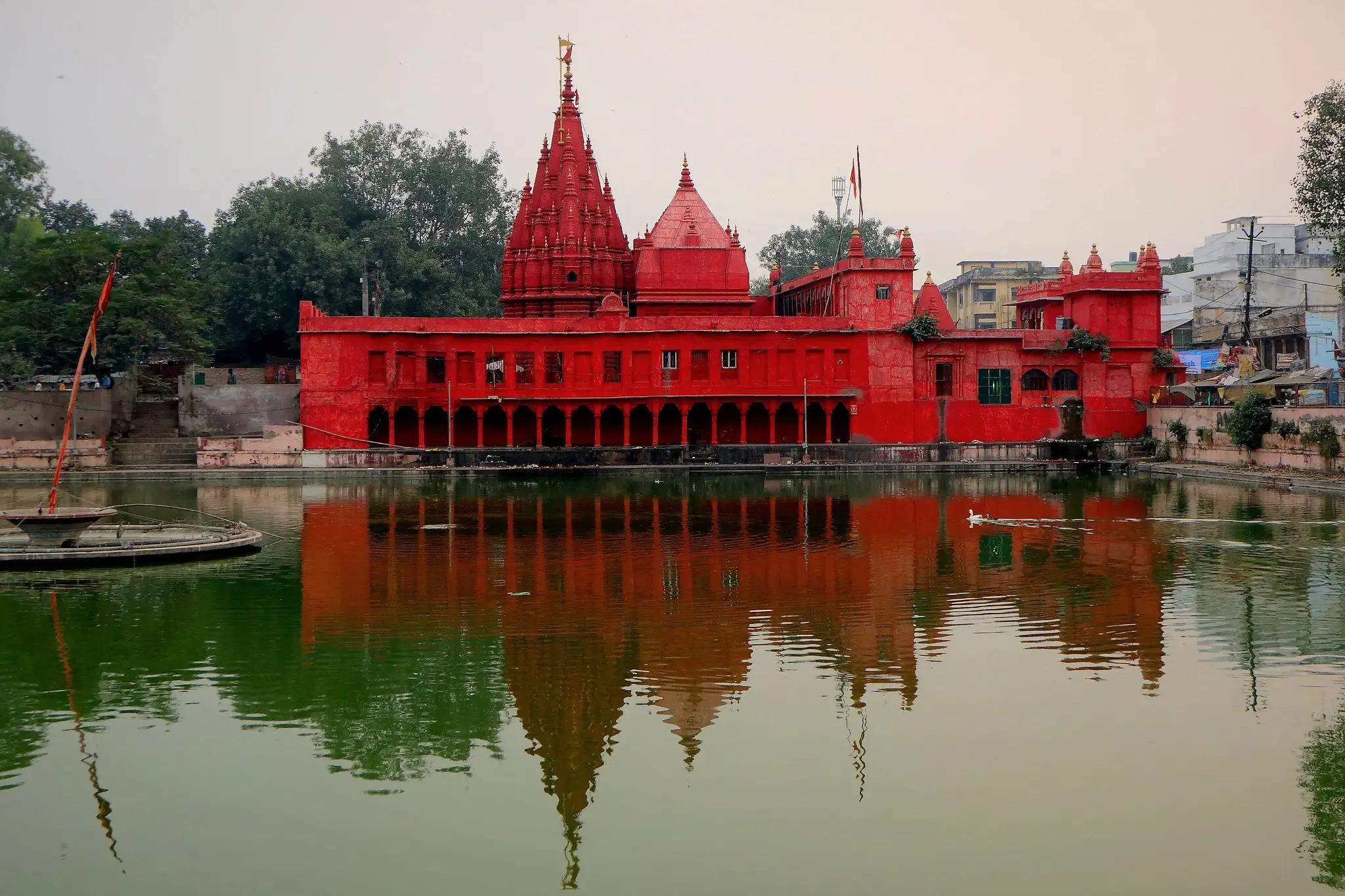
The celebration of Durga Puja in Kashi represents a spectacular meeting point between ancient Puranic theology and historical migration. In the Kashi Khanda of the Skanda Purana, Kashi is defined as the ultimate citadel of energy (*Shakti Peetha*), fiercely protected by the Goddess in her various manifestations. The text records that when the demon Durgamasur sought to destroy the cosmos, the Goddess manifested in Kashi, eliminated the threat, and swore an oath to eternally protect the city as its guardian deity.
Centuries later, during the late 18th and 19th centuries, a massive influx of royal Bengali families, scholars, and master weavers migrated to Kashi, establishing the famous riverfront neighborhood of Bengali Tola. They brought with them the grand autumn tradition of *Sharadiya Durga Puja*. The intersection of Bengal’s intricate clay art with Banaras’s deep Shaivite traditions birthed a unique cultural asset: an uncommercialized, highly orthodox preservation of Vedic rituals that continues to thrive along the ghats.
3. Premium Pandal Framework & Addresses
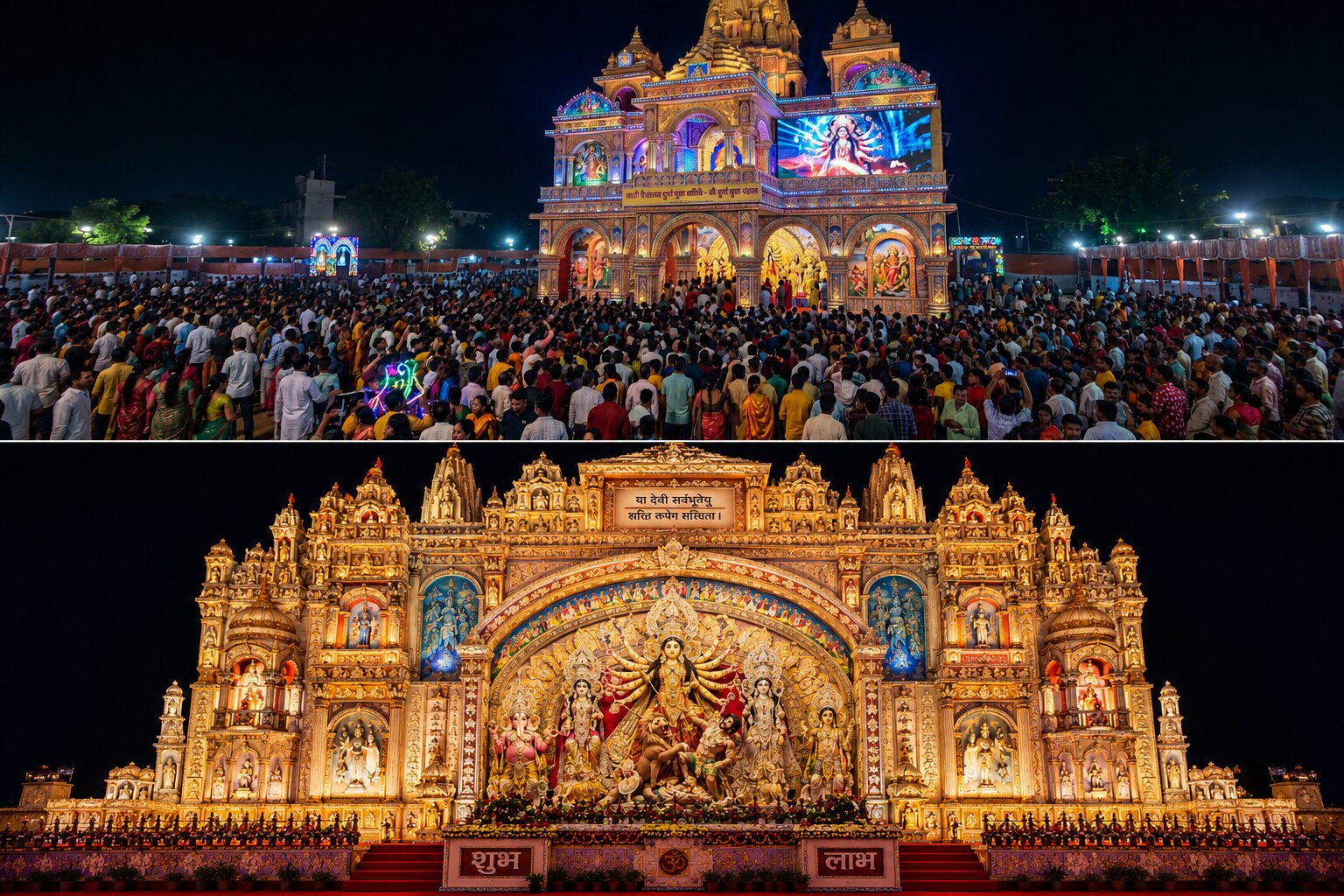
During the final four days of the festival (Shasthi through Navami), Varanasi transforms into a mesmerizing gallery of public art installations. Artisans from Bengal work closely with local structural craftsmen to build towering temples out of bamboo, canvas, and clay.
Key Heritage Pandals to Visit:
- Sanatan Dharm Inter College Pandal
Address: Luxa Road, near Godowlia Crossing, Varanasi.
Known for replicating grand architectural landmarks and palaces with detailed lighting frameworks. - The Bengali Tola Traditional Circuit
Address: Bengali Tola Lane, near Dashashwamedh Ghat, Varanasi.
The home of orthodox *Sabekiana* Durga idols sharing a single structural canvas (*Ekchala*). - Jaitpura Cultural Community Pandal
Address: Jaitpura Main Crossing, Northern Circuit, Varanasi.
Renowned for focusing heavily on social themes, Vedic eco-friendly materials, and grand devotional decorations.
4. The Evolution of Kinetic Garba & Dhunuchi Rhythms
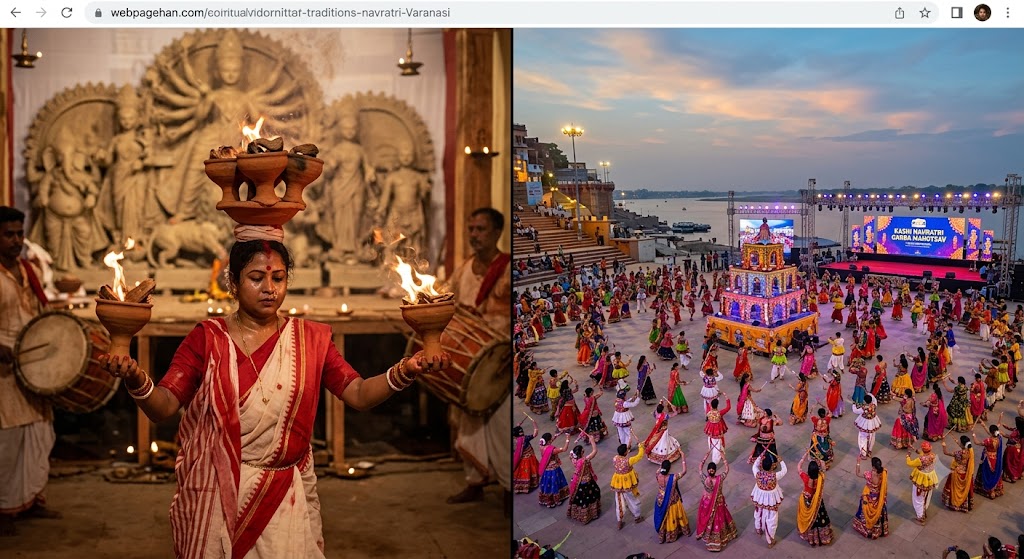
Varanasi's unique multi-cultural population creates an exceptional evening energy during Navratri. At twilight, the traditional pandals resonate with the intense, deep beats of the *Dhak* (large festival drums). Devotees participate in the Dhunuchi Naach, a high-energy ritual dance where they balance smoking clay pots filled with burning coconut husks and aromatic camphor resin between their hands and teeth.
Simultaneously, through the influence of the local Gujarati diamond and business diaspora settled around the commercial hubs of Kashi, massive community spaces like the Lahurabir grounds and Assi Ghat amphitheater transform into hubs for **Dandiya Raas and Garba**. This beautiful cross-cultural integration weaves the rhythmic circle dances of western India directly into the classic devotional fabric of Uttar Pradesh.
5. The Final Climax: Vijayadashami & The Ramnagar Ramlila
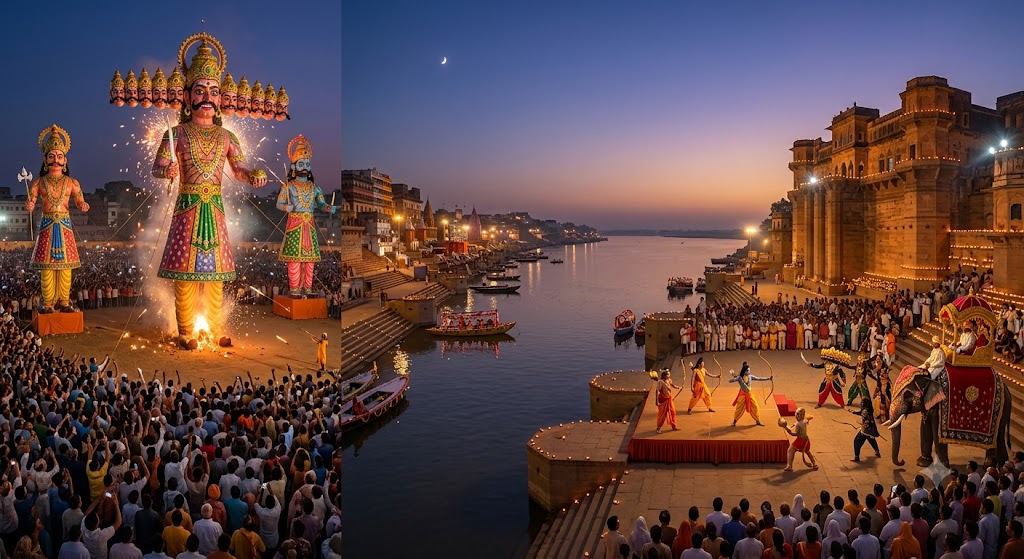
The celebrations culminate on **Vijayadashami (Dussehra)**, which commemorates a dual victory: Goddess Durga slaying the shape-shifting buffalo demon Mahishasura, and Lord Rama conquering the ten-headed demon king Ravana. Across the main maidans of Varanasi—such as the iconic Benia Bagh and Chetganj venues—massive, multi-story effigies of Ravana, Kumbhakarna, and Meghanada are systematically set ablaze with fireworks (*Ravan Dahan*), drawing thousands of cheering onlookers.
Simultaneously, the royal town of **Ramnagar**, situated just across the Ganga, hosts its world-famous, UNESCO-recognized **Ramnagar Ramlila**. This month-long theatrical performance reaches its grand conclusion on Dussehra day. The Maharaja of Kashi leads a royal procession on elephants to witness the ultimate triumph of good over evil, bringing a structured, meditative peace over the entire region before the clay idols of Durga are gently immersed into the sacred waters of the Ganga.