The Pursuit of Liberation
Varanasi is deeply intertwined with the Hindu belief in Moksha—the release from the unending cycle of birth, death, and rebirth. For millennia, families have traveled to the sacred banks of the Ganga to perform final rites and ancestral rituals, ensuring their departed loved ones achieve ultimate peace and spiritual transition.
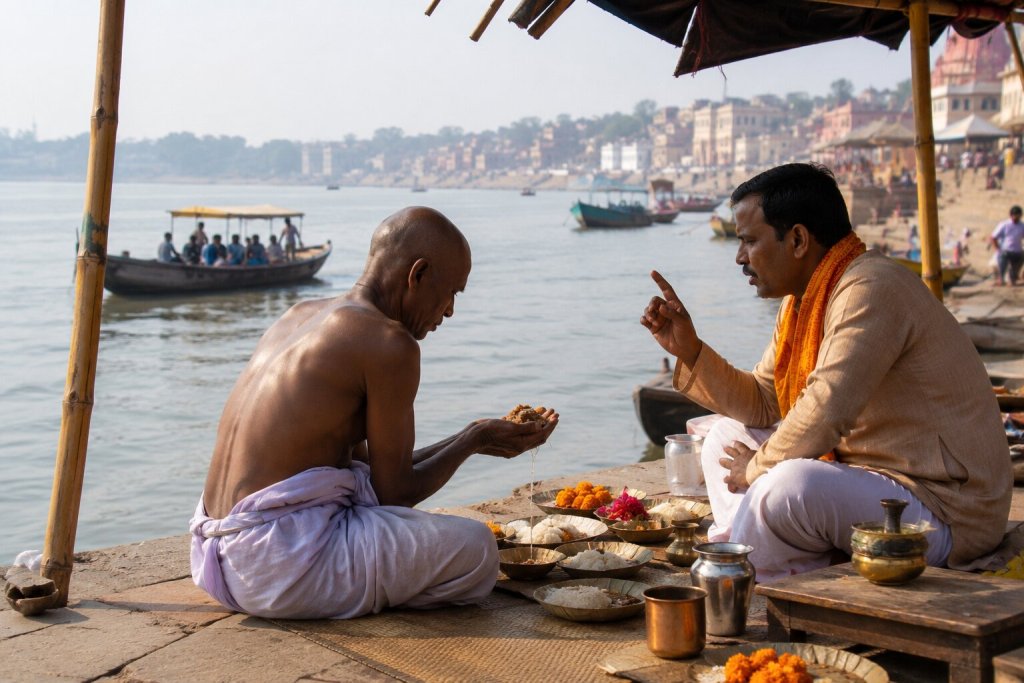
1. Pind Daan (पिंडदान)
Pind Daan is the ritual offering of circular balls made of cooked rice, barley flour, sesame seeds, ghee, and honey (known as 'Pinds'). This sacred offering satisfies the restless wandering souls of ancestors, aiding their transition from the earthly realm to the realm of the ancestors (Pitri Loka).
Step-by-Step Guide
- Preparation: Take a holy dip in the Ganga and dress in clean, traditional unstitched clothes (like a dhoti).
- Sankalp: A local priest (Teerth Purohit) leads you in taking a formal vow reciting your family lineage (Gotra) and the names of the deceased.
- Offering: The Pinds are systematically prepared, energized with mantras, and offered into the sacred river or to cows/birds.
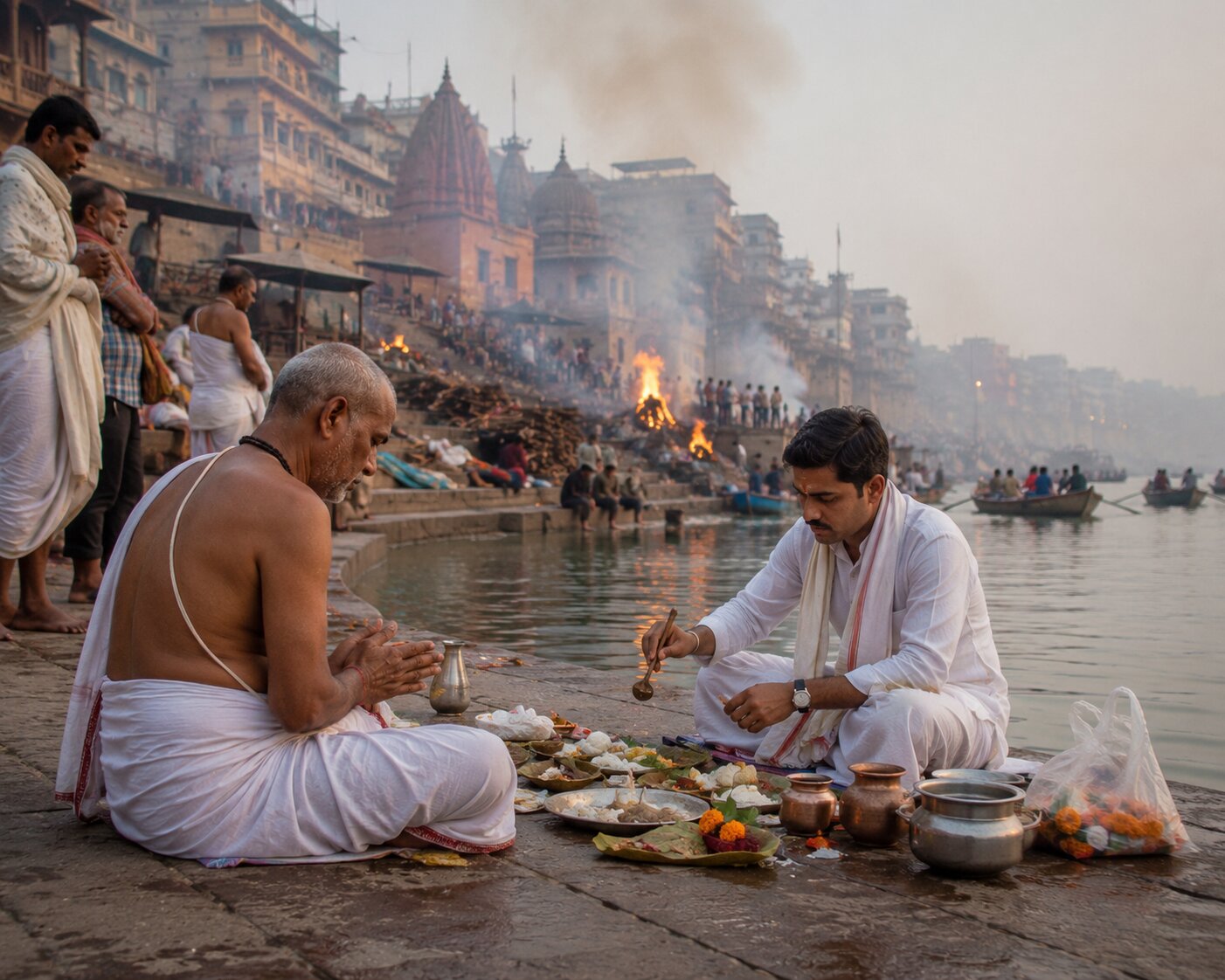
2. Shraddh Ceremony (श्राद्ध)
Shraddh is an act of deep reverence, devotion, and gratitude offered to parents and ancestors. It goes beyond the physical offering of food, focusing heavily on prayers and rituals meant to nourish and clear any residual karmic debts of the ancestral lineage.
Step-by-Step Guide
- Tarpan: Offering sacred water mixed with black sesame seeds and Kusha grass while chanting ancestral names.
- Brahman Bhoj: Feeding traditional, sattvik meals to learned priests, which symbolically satisfies the hunger of the departed souls.
- Dakshina: Offering charity, clothes, or monetary gifts to the priests to successfully conclude the rites.
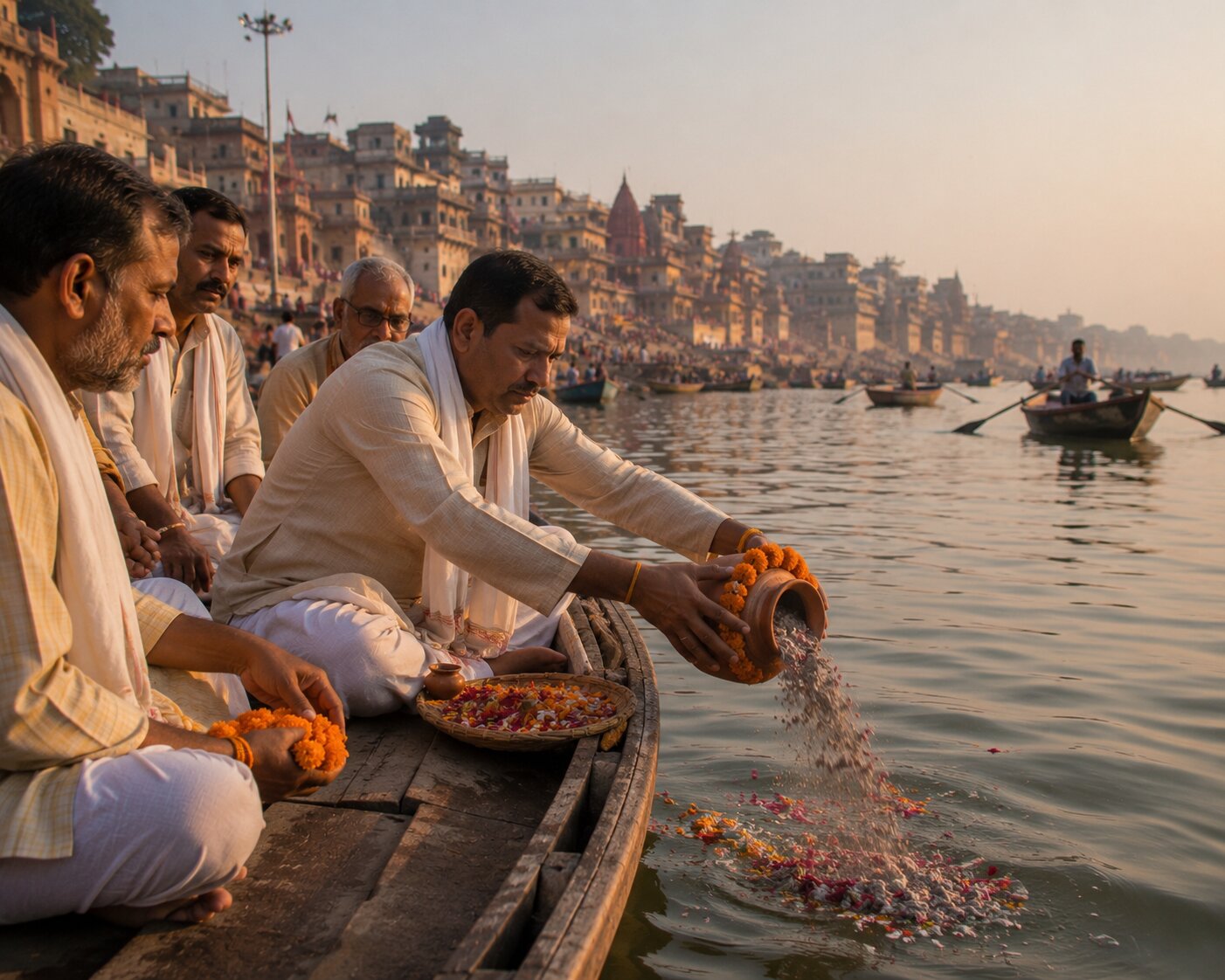
3. Asthi Visarjan (अस्थि विसर्जन)
The immersion of the cremated remains and bones (Asthi) of a loved one into the holy waters of the Ganges. Traditional texts affirm that as long as the bones of a person rest inside the waters of Mother Ganga, that soul is revered in the higher spiritual realms.
Step-by-Step Guide
- Collection & Transport: Collect the remains in an eco-friendly earthen urn (Kalash) wrapped in traditional red cloth.
- Mid-Stream Boat Prayer: Hire a boat to go to the center stream of the river, where the currents are clean and constant.
- Immersion: The priest performs a short prayer for the soul's peace, after which the urn or the remains are gently lowered into the deep waters.
Practical Guide for Visiting Families
- Verify Priests: Arrange your rituals through verified regional temple boards, trust houses, or pre-vetted local guides to ensure proper Vedic protocols and avoid inflated pricing.
- Respectful Dressing: Wear traditional Indian attire—white dhotis or kurtas for men, and simple sarees or suits for women. Avoid dark colors like black.
- Ethical Conduct & Photography: Keep your cameras packed away. Photographing cremation ceremonies at Manikarnika or Harishchandra Ghats, or private grieving families performing last rites, is strictly prohibited and highly disrespectful.
- Environmental Mindfulness: Avoid dropping plastic bags, synthetic clothes, or non-biodegradable items into the river. Use traditional clay pots and organic flowers.