History & Grand Architecture
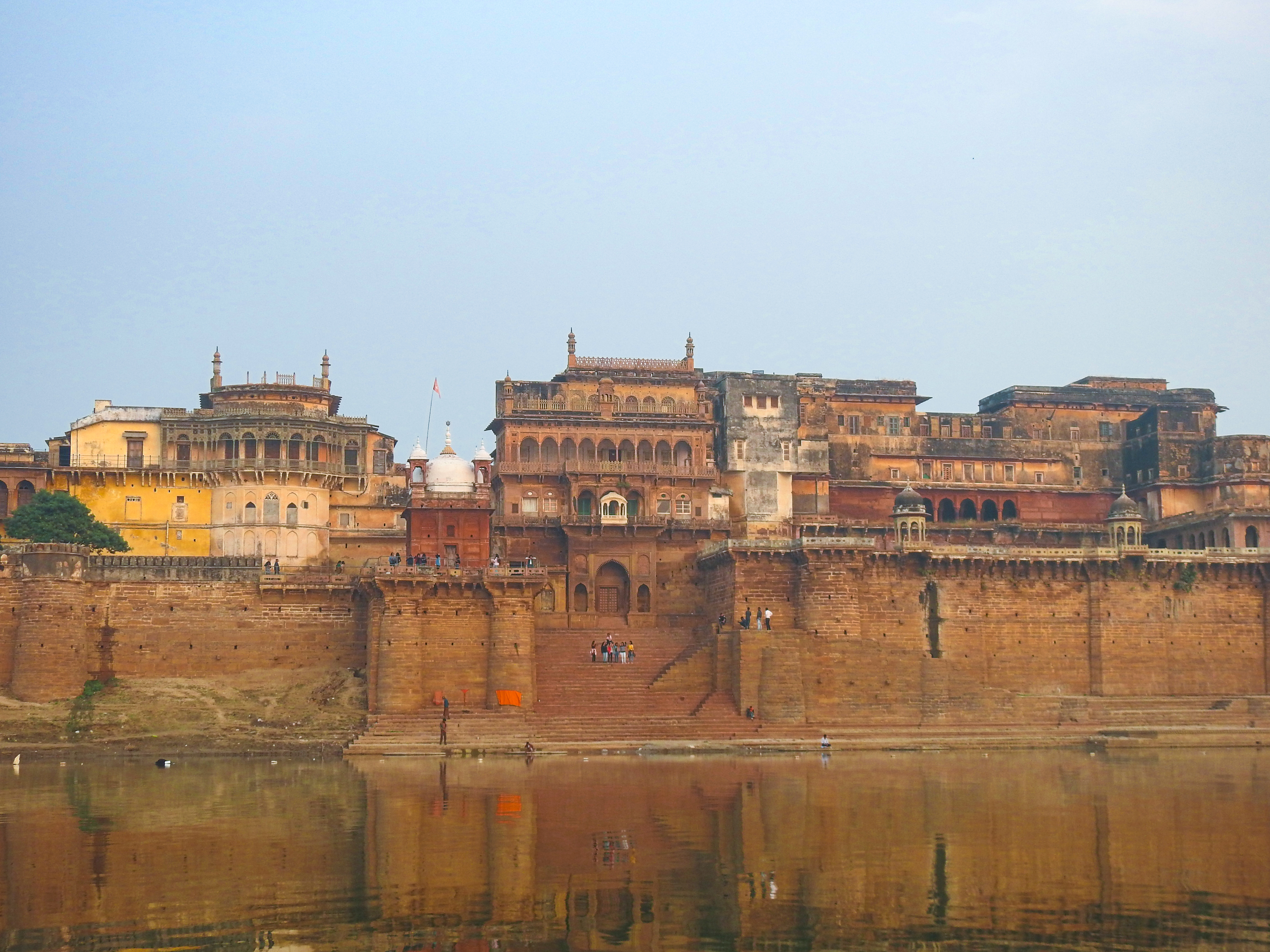
Perched majestically on the eastern bank of the holy river Ganga, directly opposite the traditional bathing ghats of Varanasi, stands the imposing Ramnagar Fort. Constructed in 1750 CE by Maharaja Balwant Singh, this architectural marvel was built entirely out of premium creamy-beige Chunar sandstone.
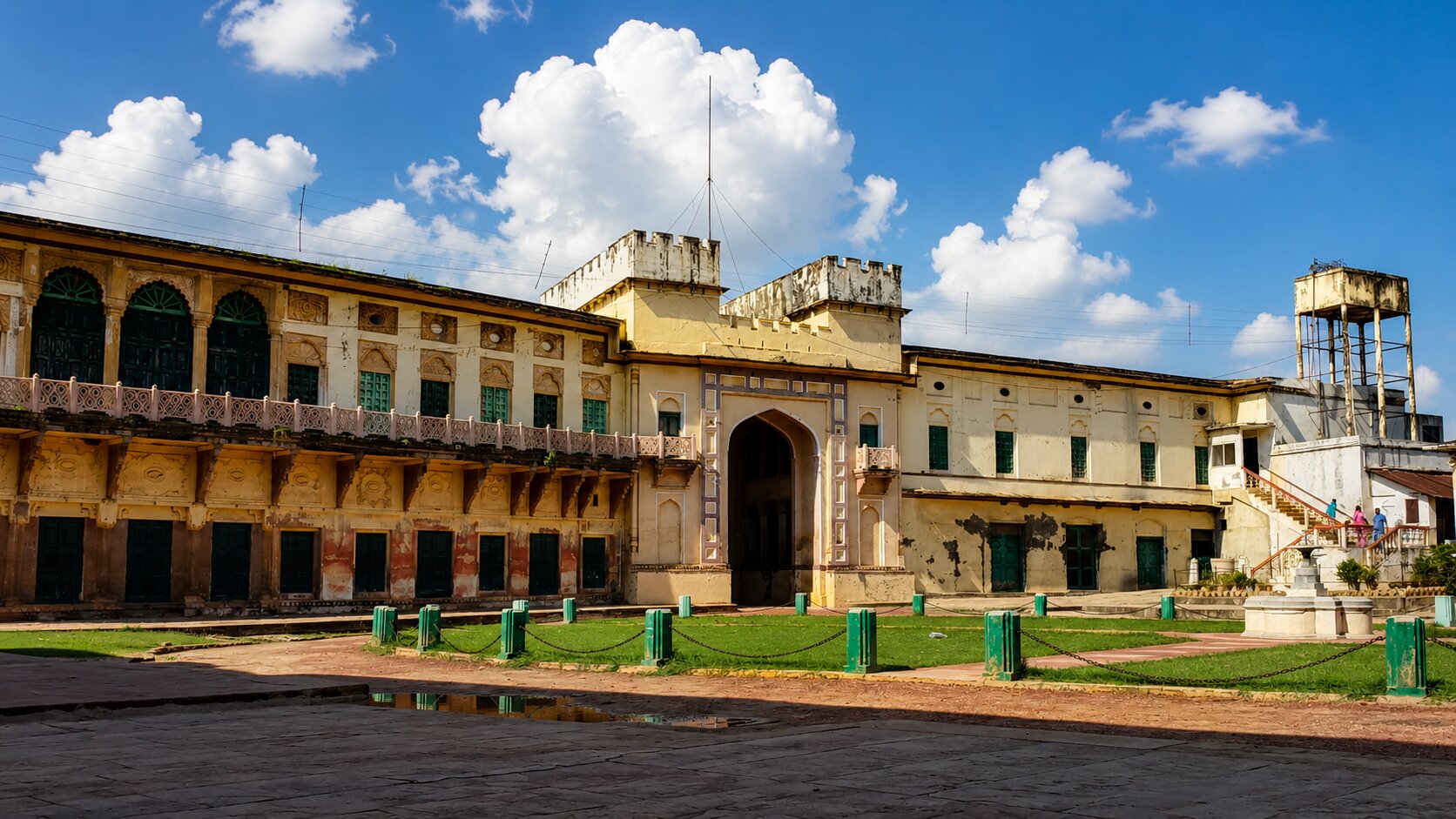
It has served as the official ancestral home and stronghold of the Kashi Naresh (the titular King of Varanasi) for nearly three centuries. Designed in the ornate Mughal-Rajput hybrid architectural style, the fort features elegant carved balconies, sprawling open courtyards, and massive defensive ramparts that beautifully catch the warm golden rays of the sunset over the river front.
The World-Famous Ramlila of Ramnagar
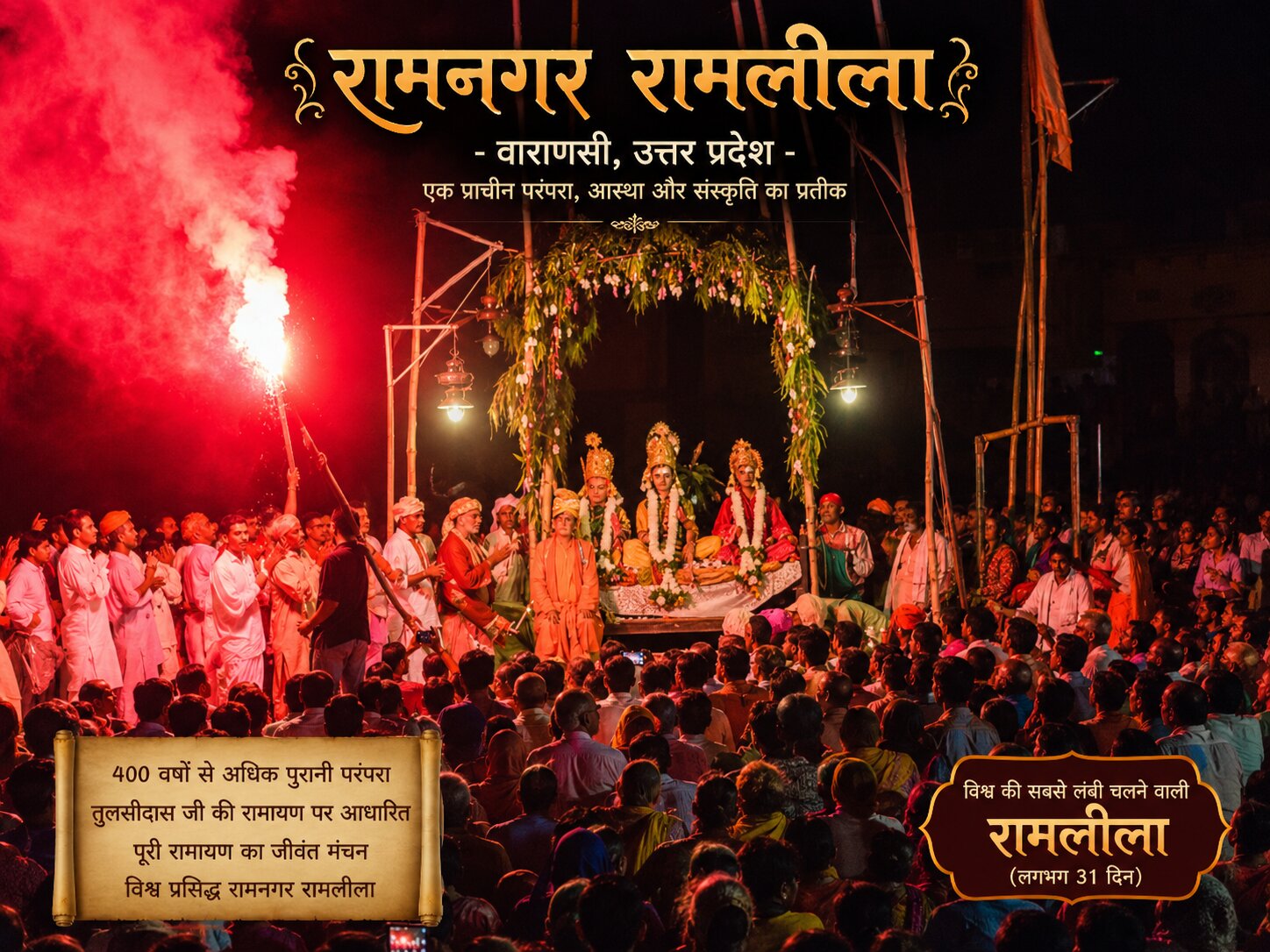
Ramnagar is globally unique for hosting the most authentic and ancient live dramatization of the epic Ramayana. Grounded in timeless tradition, the town sheds its modern skin for over a month to live out the divine narrative of Lord Rama.
📜 History & Royal Origins
The iconic Ramnagar Ramlila was initiated by Maharaja Udit Narayan Singh of Benares in 1783 CE. Inspired by the deep local reverence for Sant Tulsidas’s epic poem Ramcharitmanas, the royal house established a grand format where the text is sung verbatim by special reciters known as Ramayanis. For generations, the current royal descendants have preserved and actively patronized this theatrical wonder, keeping its execution untainted by modern technology.
🌟 Cultural Importance & UNESCO Status
Recognized by UNESCO as a Masterpiece of the Oral and Intangible Heritage of Humanity, it spans an intensive 31 days. It is completely unique because it does not use electric microphones, loudspeakers, or artificial halogen stage lights. The actors perform solely under the warm glow of natural torchlights (mashaals).
Furthermore, the play is entirely mobile; the entire town serves as a vast open-air stage with permanent sets constructed kilometers apart representing Ayodhya, Janakpur, Chitrakoot, and Lanka. The thousands-strong audience travels alongside the actors every evening, participating as citizens of the ancient epic.
🪔 The Sacred Ramlila Aarti (Bhor & Evening Rituals)
The Ramlila is treated not as mere acting, but as a living spiritual incarnation. The young male actors who portray Lord Ram and his brothers are rigorously selected and revered as the living deities (Swaroops) themselves. At the conclusion of each evening's performance, a grand Aarti is held where thousands silently stand under the torchlight to seek blessings.
A spectacular highlight is the emotional Bharat Milap and subsequent crowning ceremony, where a legendary Bhor ki Aarti (Dawn Aarti) takes place. Tens of thousands of devotees gather in the early morning fog as the Queen Mother and the royal family offer prayers, accompanied by deafening chants of "Har Har Mahadev" echoing across the Ganges.
📅 Timing & Panchang Schedule
Unlike modern theatrical productions, the execution of the Ramlila is governed strictly by the traditional Hindu Lunar Calendar (Panchang):
- Commencement: It begins annually on the auspicious day of Anant Chaturdashi (usually in September/October).
- Duration: Stretches continuously for 30 to 31 nights depending on the lunar cycles.
- Daily Timings: The plays begin promptly in the late afternoon around 4:30 PM to 5:00 PM daily, lasting for 3–4 hours until the night sets in and the concluding Aarti is performed.
- Culmination: It peaks on Vijayadashami (Dussehra) with the dramatic burning of the massive 100-foot effigy of Ravana, and officially concludes a few days later following the divine reunion and coronation.
The Saraswati Bhawan Museum & The Famous White Bagghi
A major portion of the fort is preserved as a public museum, housing an eccentric and priceless private collection belonging to the royal family of Kashi.
The Royal Armory & Clocks
The galleries display magnificent ivory carvings, traditional gold-brocaded silk textiles, antique jewel-encrusted swords, vintage matchlock guns, and a rare astronomical clock that tracks solar cycles, lunar phases, and star constellations alongside standard time.
The Famous White Bagghi (Safed Bagghi)
The grand courtyard houses the prized **White Bagghi** (a pristine, highly decorative royal white horse carriage) alongside vintage American motorcars and old silver royal palanquins used during ceremonial state processions like Dussehra.
The Legendary Ramnagar Lassi
No trip across the river to the fort is ever complete without savoring the legendary local culinary landmark located right outside the fort's main entryway marketplace lane.
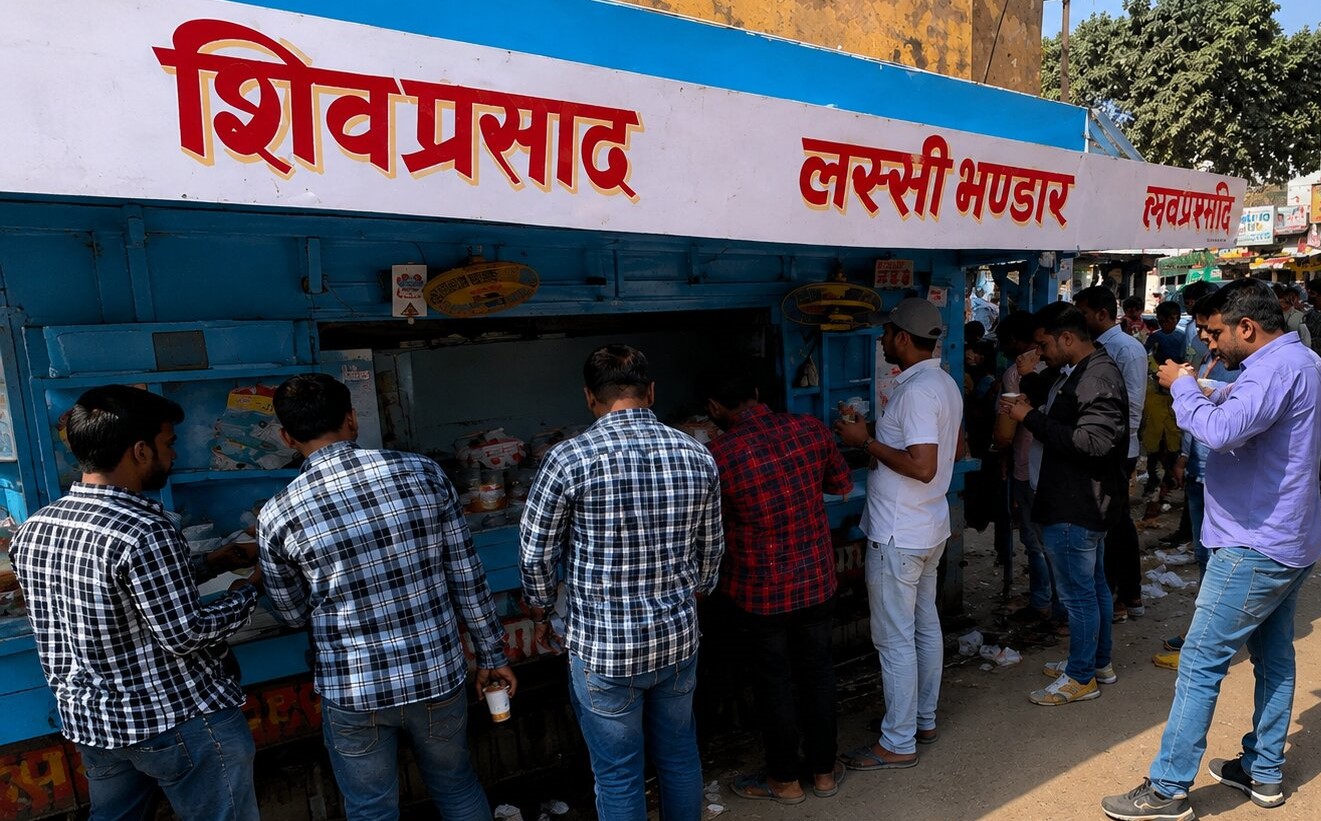
The Icon: Shiv Prasad Lassi (Chachi ki Lassi)
Served in eco-friendly clay cups called Kulhads, this incredibly thick, hand-churned yogurt beverage is traditionally topped with a mountain of fresh, dense cream (malai) and homemade sweet cheese curd (*Rabri*). It is so thick that it must be eaten with a wooden spoon before drinking!
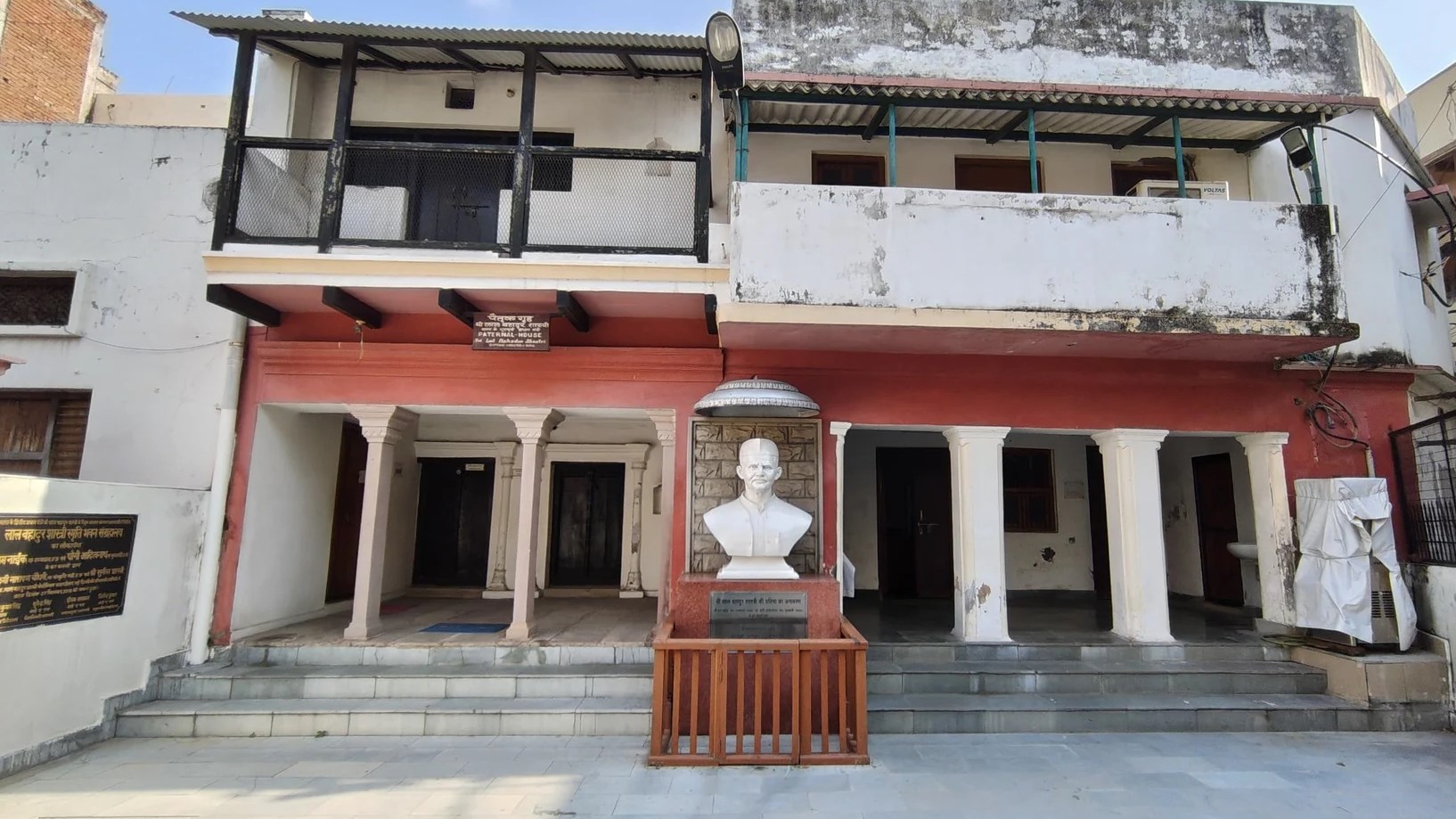
Ancestral Home of Shri Lal Bahadur Shastri
Located just a short walk or rickshaw ride away within the narrow inner lanes of Ramnagar is the ancestral childhood home of India’s beloved second Prime Minister, Lal Bahadur Shastri.
This simple mud and brick house has been elegantly restored as a memorial museum by the government. It offers a deeply moving glimpse into the profoundly humble origins of the leader who coined the immortal national slogan "Jai Jawan, Jai Kisan". Visitors can view his personal books, clothing items, and simple kitchen utensils preserved exactly as they were during his childhood years.
How to Reach & Distances from Major Hubs
Ramnagar Fort is located on the eastern bank of the Ganges, directly opposite the main city area of Varanasi. It can be accessed via the **Malviya Bridge** (near Kashi Station) or the **Ramnagar-Samne Ghat Bridge** (near BHU), making it easily reachable by road.
🚗 By Road & Public Transport
You can easily hire an auto-rickshaw, e-rickshaw, or cab from any part of Varanasi. Alternatively, for a scenic experience, you can take a traditional boat ride from Dashashwamedh Ghat or Assi Ghat directly across the river to the fort's private landing steps.
📍 Distances from Key Transit Hubs
- Varanasi Junction (Cantt Station): ~11 Km (approx. 35-45 mins drive)
- Mughalsarai Station (Pt. Deen Dayal Upadhyaya Jn): ~12 Km (approx. 30 mins)
- Lal Bahadur Shastri Airport (VNS): ~33 Km (approx. 1 hour via NH31)
🕌 Distances from Other Sacred Sites
- Banaras Hindu University (BHU) Campus: ~3.5 Km (approx. 10 mins via Samne Ghat Bridge)
- Assi Ghat: ~5.5 Km (approx. 15-20 mins)
- Kashi Vishwanath Temple / Dashashwamedh Ghat: ~9 Km (approx. 30 mins)
- Sarnath Buddhist Site: ~17 Km (approx. 45-50 mins)
⏱️ Ideal Route Planning Tip
Because Ramnagar sits right across from the southern end of Varanasi, it pairs perfectly with a morning or afternoon visit to the **BHU Campus (New Vishwanath Temple)** or **Assi Ghat**. Crossing the Samne Ghat bridge cuts down travel time significantly compared to traveling from the congested northern town center.