← Kashi Guide Home
The Holy Monsoon Devotion

Sawan ka Somwar in Kashi

A comprehensive cultural and spiritual layout detailing the significance of Shravan Mondays and the legendary endurance of the Kanwar Yatra.

The Mythological Purana

History & Significance for Hindu Religion

The month of Shravan (Sawan) is completely dedicated to Lord Shiva. According to Puranic history, during the churning of the cosmic ocean (Samudra Manthan), a lethal poison (Halahal) emerged that threatened to dissolve all creation. Lord Shiva drank the poison to save the universe, storing it safely in his throat, which turned a deep blue—earning him the name *Neelkanth*. To cool his burning throat, gods and devotees poured holy water upon him, giving rise to the eternal tradition of Shravan water offerings.

A decorated Shiva Lingam with bilva leaves and flowers
Spiritual Practice

The Power of Somwar Vrat

Mondays (Somwar) are astrologically ruled by the Moon, which rests on Lord Shiva’s matted hair. Observing a strict fast on Sawan Mondays is believed to clear deep mental anxieties, balance emotional conflicts, and grant health, peace, and spiritual focus.

Visual Spectacle

The Saffron Transformation

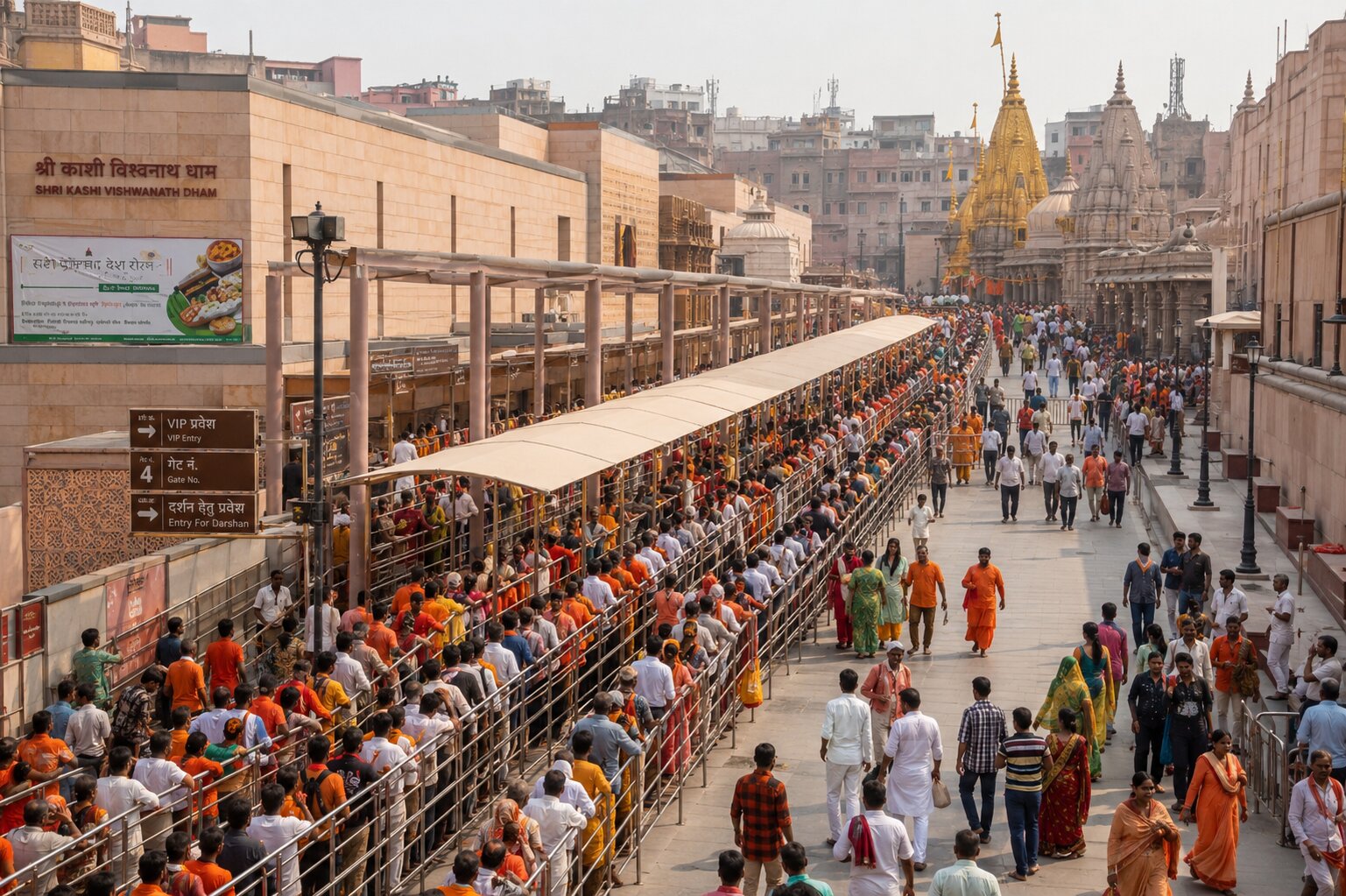
During this month, the ancient streets of Varanasi turn into a sea of bright saffron. Hundreds of thousands of devotees, wearing traditional saffron garments, walk in miles-long lines to offer continuous prayers at the core Kashi Vishwanath Jyotirlinga.

Special Rituals

Exquisite Shringar Aartis

Each Monday evening during Sawan, the main deity is beautifully adorned with special themes using natural elements like flowers, hemp leaves, and block-printed designs, drawing massive crowds of observers into the temple corridors.

The Ultimate Pilgrimage of Endurance

The Kanwar Yatra Phenomenon

The Walk of Faith

The Holy Water Carrying Walk

The Kanwar Yatra is a monumental barefoot pilgrimage. Millions of devotees, known as *Kanwariyas*, fetch holy water from the Ganga at Sultanganj or Haridwar, or locally from the banks of Kashi, carrying it across their shoulders in balance-baskets called *Kanwars*.

The central rule is absolute: the sacred water pots must never touch the ground at any point during the trek. If a pilgrim needs to rest, the Kanwar must be carefully hung on designated high wooden stands or tree branches.

Shouting "Bam Bam Bhole," these pilgrims cover vast distances on foot, directly channeling their exhaustion into raw devotional energy to perform the final water abhishekam upon the sacred lingam.
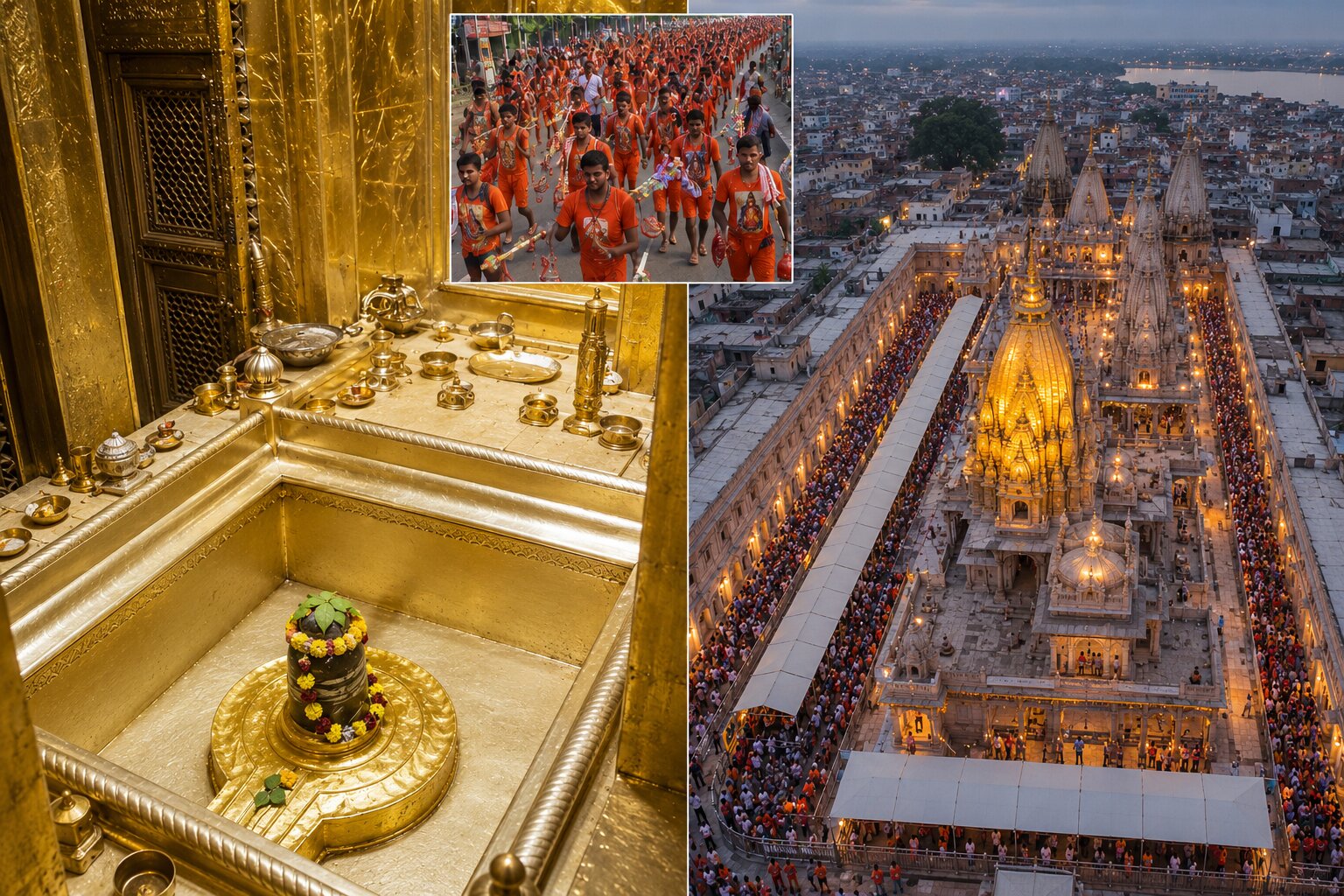
Kanwariyas walking barefoot carrying decorated bamboo poles

Logistics & Safety Framework

Critical Preparation & Crowd Realities

The heavy influx during the monsoon season demands structured planning. Review these operational tips to navigate Sawan smoothly.

Health & Hygiene

Monsoon Health and Hydration

Since Sawan coincides with the peak Indian monsoon season, high humidity and sudden rainstorms are frequent. Stick exclusively to bottled mineral water, avoid raw street food to prevent stomach issues, and pack a light raincoat along with skin-soothing powders.

Logistics

Traffic Blockades & Walking Routes

Major routes leading into Varanasi are closed to heavy commercial vehicles, and internal lanes are restricted to foot traffic from Sunday morning through late Monday night. Ensure your accommodations are within walking distance of your intended destinations, or plan your local travel windows accordingly.