Importance in Hindu Religion
Standing on the western bank of the holy river Ganga in Varanasi, the Kashi Vishwanath Temple is one of the most revered structures in Hinduism. It houses one of the 12 sacred Jyotirlingas, which represent the supreme, infinite reality of Lord Shiva. According to Hindu theology, Varanasi is the oldest living city in the world, sustained on the tip of Lord Shiva's trident.
A visit to the temple and a dip in the sacred Ganges are believed to wash away all sins and lead toward Moksha (liberation from the cycle of rebirth). Mentioned extensively in the ancient Skanda Purana, it remains the ultimate pilgrimage destination for millions of devotees globally.
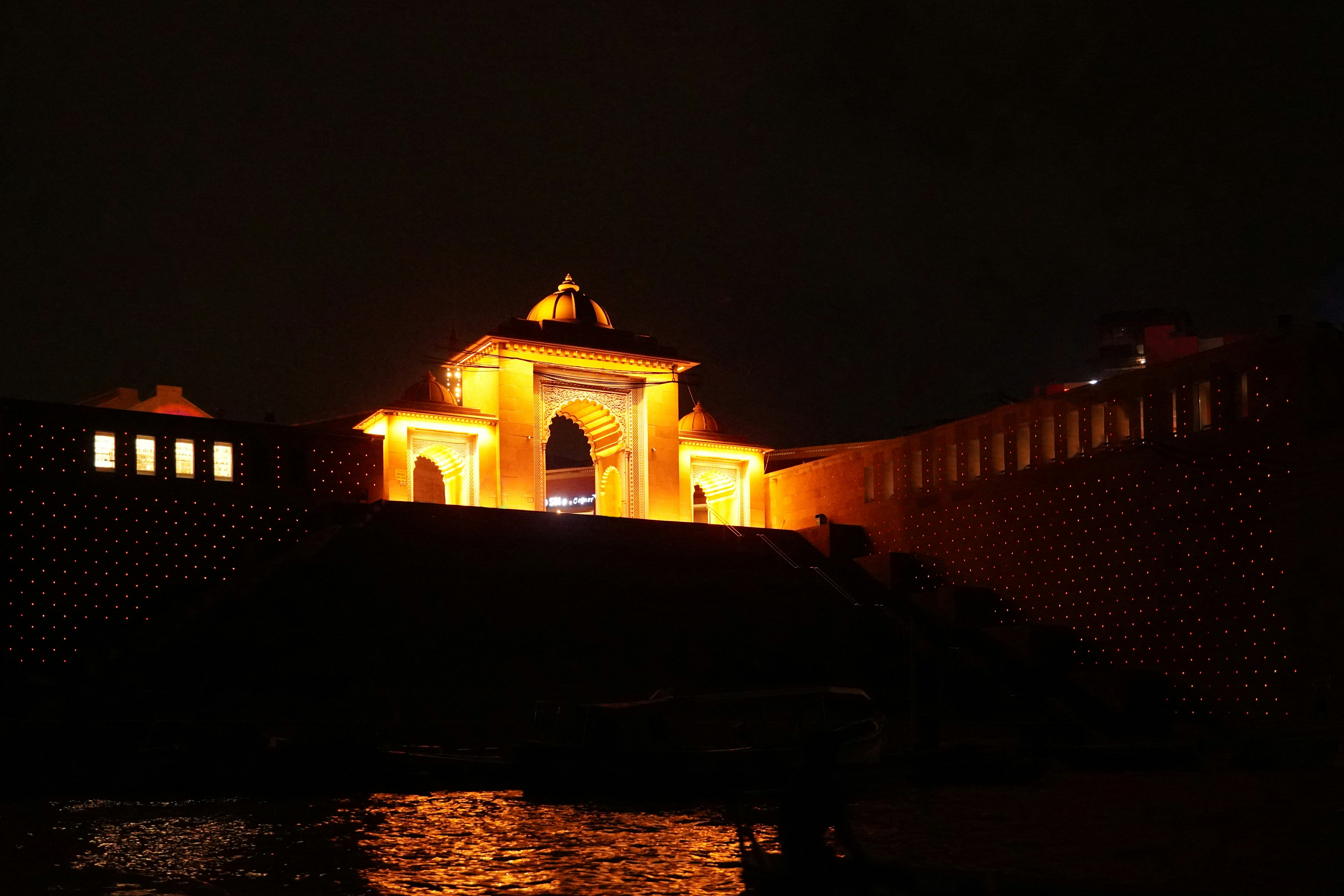
A Resilient History: Invasions & Attacks
The timeline of Kashi Vishwanath is a profound testament to architectural resilience and enduring faith. The temple has faced repeated targeted acts of destruction by foreign invaders over several centuries, yet it was consistently revived by passionate devotees.
1194 CE: First Recorded Attack
The original ancient structure (frequently referred to as the Adi Vishveshwar temple) was brutally plundered and razed by the army of Qutb-ud-din Aibak, acting under the command of Muhammad Ghori.
Late Medieval Era
After being rebuilt by a local merchant around 1230 CE, the temple faced subsequent instances of partial or complete demolition under regional Delhi Sultanate regimes, including Sikandar Lodi's forces in 1494.
1669 CE: Aurangzeb's Demolition
The most devastating blow occurred when Mughal Emperor Aurangzeb officially ordered the complete demolition of the grand temple structure. In its place, the Gyanvapi Mosque was constructed using remnants of the original temple walls.
The Historic Rebuilds & Golden Domes
Despite repeated attempts to erase the spiritual landmark, it rose from the ashes multiple times due to the conviction of Hindu kings and scholars.
Raja Todar Mal's Effort: In 1585, during Akbar's reign, the influential scholar Narayan Bhatta alongside Raja Todar Mal reconstructed the temple in grand fashion, bringing back structured Vedic worship to the city.
Ahilyabai Holkar's Masterpiece (1780): The current existing sanctum of the temple was constructed on an adjacent site next to the mosque by the legendary Maratha queen, Maharani Ahilyabai Holkar of Indore. It stood as a magnificent example of the classic North Indian Nagara style of architecture.
The Story of the Gold (Maharaja Ranjit Singh)
In 1835, the iconic Sikh ruler Maharaja Ranjit Singh of the Sikh Empire donated nearly 1 tonne (1,000 kg) of pure gold to wrap and plate the temple’s towering spires and domes, giving it the world-famous title of the "Golden Temple of Varanasi." Continuing this legacy, in early 2022, an anonymous devotee donated an additional 60 kg of gold to intricately plate the internal walls of the sanctum sanctorum.
Current Position (The Kashi Corridor) & Future Plan
For centuries, the temple was enclosed in suffocatingly narrow lanes, making accessibility highly difficult for elderly or disabled pilgrims. In December 2021, the historic Shri Kashi Vishwanath Dham Corridor Project was officially inaugurated by Prime Minister Narendra Modi.
The Modern Dham Experience
The complex has dramatically expanded from a tight 5,000 sq ft area into a massive, state-of-the-art campus sprawling over 500,000 sq ft. It now seamlessly links the main temple entry points directly to the river banks of the Ganges at Lalita Ghat, meaning pilgrims can take a holy dip and walk directly through clean, wide pathways straight to the deity without navigation gridlocks.
Future Visions
With an explosion in spiritual tourism drawing over 100 million visitors, continuous infrastructure projects are underway. Current and future layouts involve smart crowd management networks, multi-lingual digital interpretation hubs, eco-friendly floral recycling plants (turning used offerings into heritage incense sticks), and high-speed transit ropeways spanning across Varanasi to connect transit hubs to the temple periphery seamlessly.
The Kashi Vishwanath Corridor: A Spiritual Renaissance
The Shri Kashi Vishwanath Dham Corridor is a monumental 500,000 sq ft project that has transformed Varanasi's pilgrimage landscape. Officially inaugurated in December 2021, the corridor created a sprawling, open layout that dramatically replaces the old, heavily congested paradigm of worship with modern navigational clarity.
The Driving Reason for Development
For centuries, reaching the main shrine required navigating a maze of claustrophobic, suffocatingly narrow lanes (galis) barely a few feet wide. This layout presented severe bottlenecks and immense safety hazards during peak festivals like Mahashivratri, rendering the site nearly inaccessible for elderly, disabled, or unwell pilgrims. The corridor was engineered to dismantle these navigation gridlocks, guarantee public safety, and restore the direct, historic link between the holy river and the deity.
Modern Facilities & Infrastructure
The state-of-the-art campus offers world-class amenities designed to accommodate millions of daily visitors comfortably:
- Yatri Suvidha Kendras: Massive tourist facilitation centers providing locker rooms, automated help desks, and resting lounges.
- Vedic Kendra & Bhakt Niwas: Dedicated centers for spiritual discourse paired with modern guest rooms for overnight stays.
- Mumukshu Bhawan: A special, reverent home built exclusively for salvation seekers.
- Universal Accessibility: High-speed outdoor escalators, wide ramps, and golf-cart transit paths engineered for senior and disabled citizens.
The Four Fortress-Style Entry Gates
The corridor features four grand, distinct entry gates strategically placed in all four directions, connecting the spiritual complex directly to both the city and the riverbanks:
| Gate Name / Number | Location & Connectivity | Best Used For |
|---|---|---|
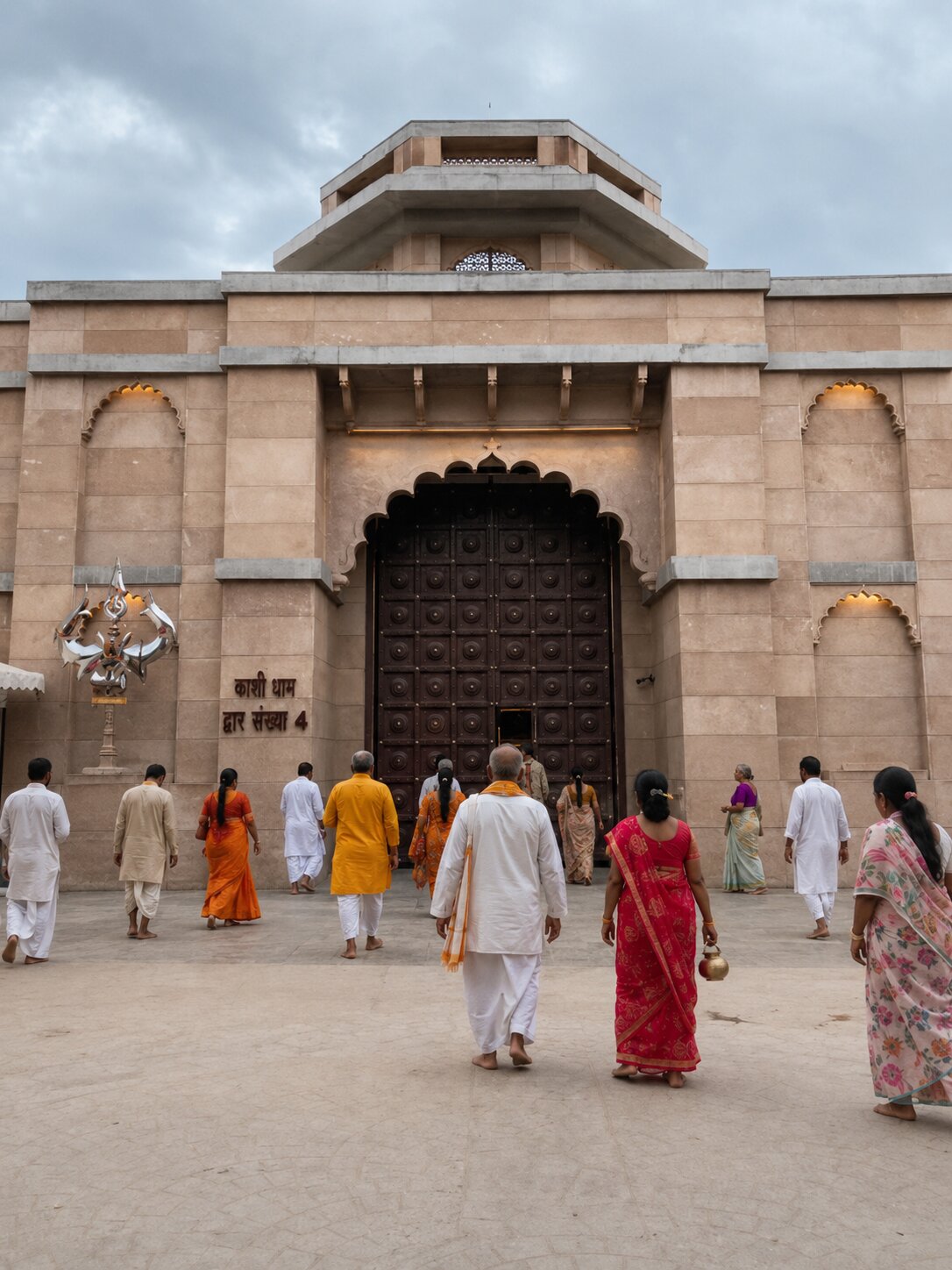
| Gate No. 4 (Ganesh Gate / Bansfatak) | Accessible from the Godowlia-Maidagin city road crossing. Features a flat, step-free red sandstone pathway. | Best for elderly travelers and wheelchair access. This is the premier gate for online ticket holders and Sugam Darshan (VIP) entry. |
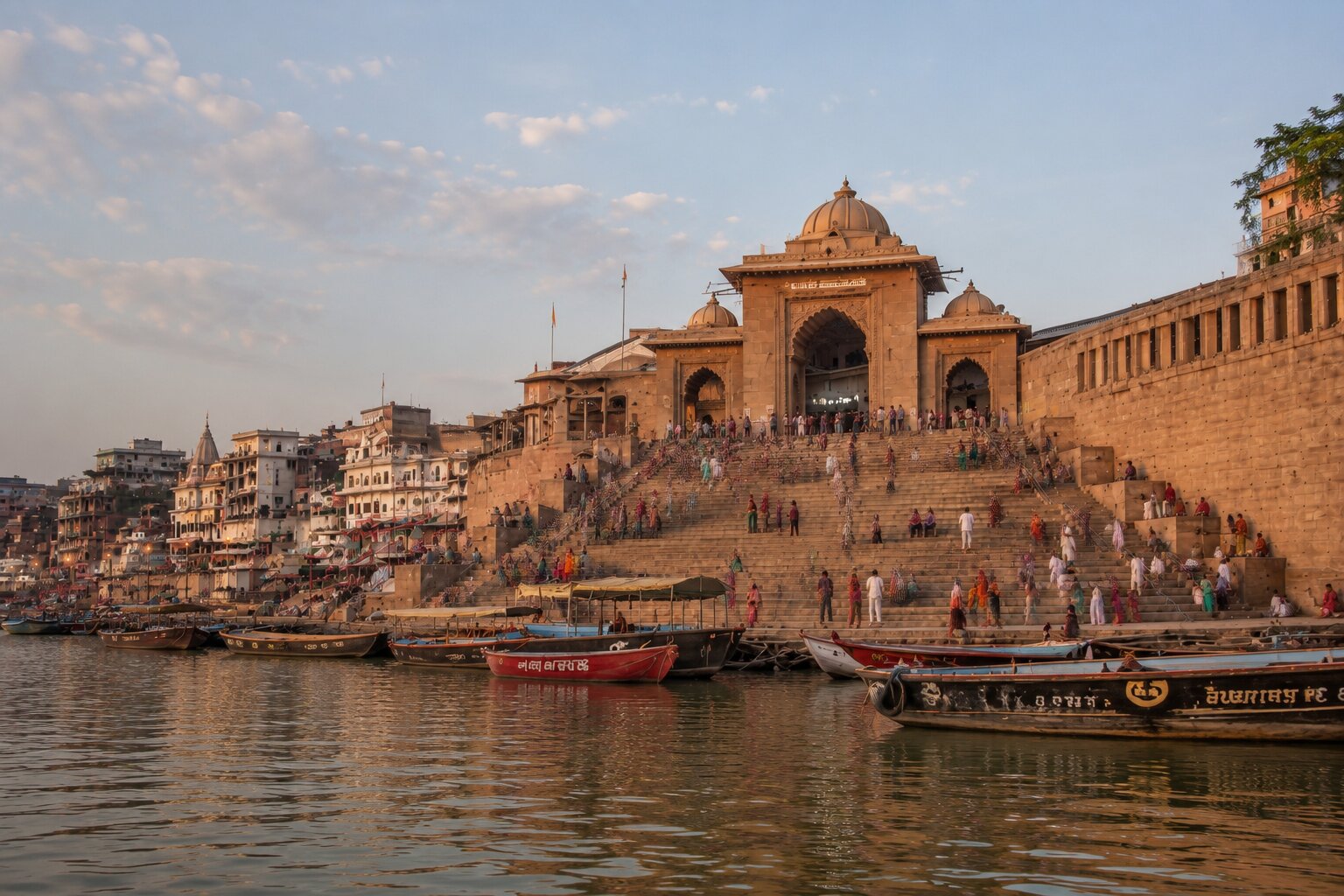
| Riverfront Gate (Lalita Ghat Entry) | Located directly on the banks of the Ganges. Connects a jetty to the grand staircase and outdoor escalator. | Best for scenic arrivals via boat cruise. It allows pilgrims to take a holy dip and walk directly up into the main complex. |
| Gate No. 1 (Dhundi Raj Ganesh Gate) | Opens directly into the traditional, vibrant local spice and textile marketplaces. | Best for experiencing the raw, historical street vibe of old Varanasi after completing your darshan. |
| Gate No. 2 (Saraswati Gate) | Tucked into the classic dense market areas adjacent to the general public assembly zones. | Mainly handles high-volume local foot traffic and general public lines during major festivals. |
Breathtaking Ganga River Views
One of the most profound additions is the open-air Ganga View Gallery. For the first time in modern history, devotees standing inside the temple courtyard can look out over clear, panoramic vistas of the holy Ganges. The 400-meter paved stone pathway forms a scenic link from the riverfront up to the temple's main plaza, allowing pilgrims to easily witness the daily sunrises and the majestic evening Ganga Aarti directly from the complex's elevated viewpoints.
A Sanctuary of Over 40 Ancient Temples
During the massive clearing of over 300 dilapidated buildings to make room for the corridor, a major archaeological victory occurred: **more than 40 long-lost, historical temples** were rediscovered hidden within the properties. Rather than removing them, the project carefully restored these heritage shrines. Visitors can explore the Manimala, a dedicated gallery displaying the preserved remains of 27 ancient temples, alongside the historic **Gyanvapi Mandap** and its ancient Nandi structure.
Ritual Timings, Online Booking & Best Time to Visit
To experience the absolute spiritual energy of Baba Vishwanath, attending one of the daily structured Aartis is highly recommended.
Official Daily Aarti & Schedule
| Ritual / Aarti Name | Time Interval | Significance / Notes |
|---|---|---|
| Mangala Aarti | 03:00 AM – 04:00 AM | The grand morning awakening ritual; requires mandatory pre-booked tickets. |
| General Darshan | 04:00 AM – 11:15 AM | Open to the general public for free lines. |
| Bhog Aarti | 11:15 AM – 12:20 PM | Mid-day offering of sacred meals to the deity. |
| Sapta Rishi Aarti | 07:00 PM – 08:15 PM | An ancient 750-year-old ritual where 7 distinct sages worship simultaneously. |
| Shringar / Bhog Aarti | 09:00 PM – 10:15 PM | Evening dressing and aesthetic decoration of the Jyotirlinga. |
| Shayan Aarti | 10:30 PM – 11:00 PM | Final resting prayers before closing the main gates. (Free Entry) |
Online Ticket Booking
Tickets for specialized rituals like Mangala Aarti or quick access (Sugam Darshan) must be booked via the official portal. General slots open daily at 11:00 AM IST for the next 30 days. Bookings fill up almost instantly for weekends and festivals.
Visit Official WebsiteBest Time to Visit
The Ideal Months: October to March offers highly pleasant weather for exploring the complex and walking along the ghats.
Best Time of Day: Early morning hours (around 4:30 AM to 6:00 AM) right after Mangala Aarti to bypass large local crowds.