1. Historical Evolution & Origins
The legacy of fine weaving in Varanasi dates back thousands of years, finding mentions in ancient Vedic texts and Buddhist Jataka tales. Originally renowned for its exquisite cotton fabric, the transition to rich silk textiles occurred dramatically during the Mughal Empire in the 14th to 16th centuries.
Under the patronage of Emperor Akbar, Persian design aesthetics integrated seamlessly with traditional Hindu weaving techniques. Master weavers from Persia migrated to Kashi, introducing intricate floral patterns, hunting scenes (Shikargah), and sophisticated gold and silver brocade works (Zari). This synthesized art form evolved into the royal Banarasi weave we celebrate today.
2. Importance in Religion & Rituals
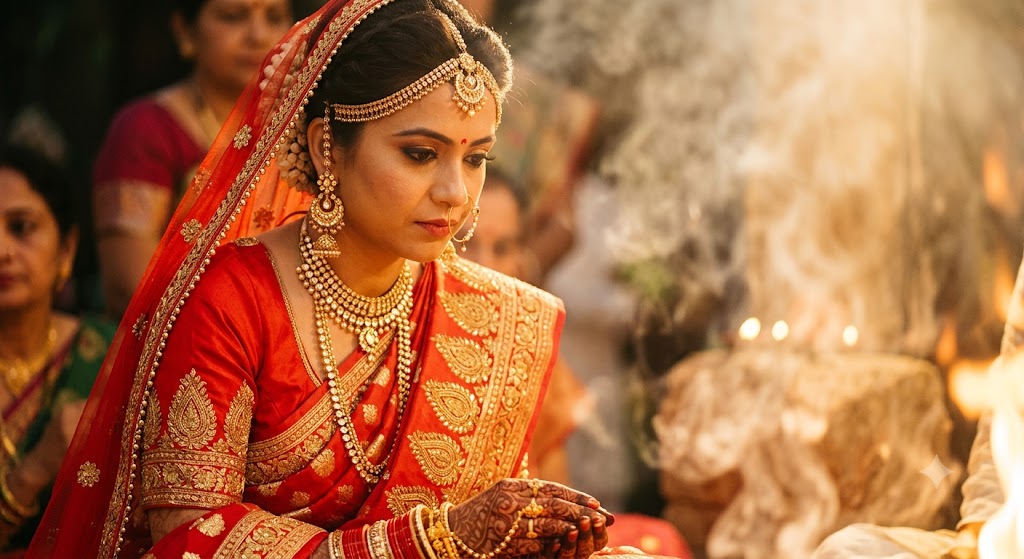
In Hindu culture, textiles are deeply bound with spiritual sanctity, and the Banarasi silk saree stands at the pinnacle of auspicious attire. Red and yellow Banarasi silk sarees are considered exceptionally sacred and are standard for brides during Vedic wedding ceremonies.
The purity of pure silk combined with the sacred geometry of the woven motifs makes it an essential choice for major life milestones, religious festivals like Diwali, and temple visits. It is common custom to drape the deities of Kashi Vishwanath and major local temples in custom-woven Banarasi brocades during special shringar rituals, reinforcing its divine connection.
3. Global Fashion & Contemporary Appeal
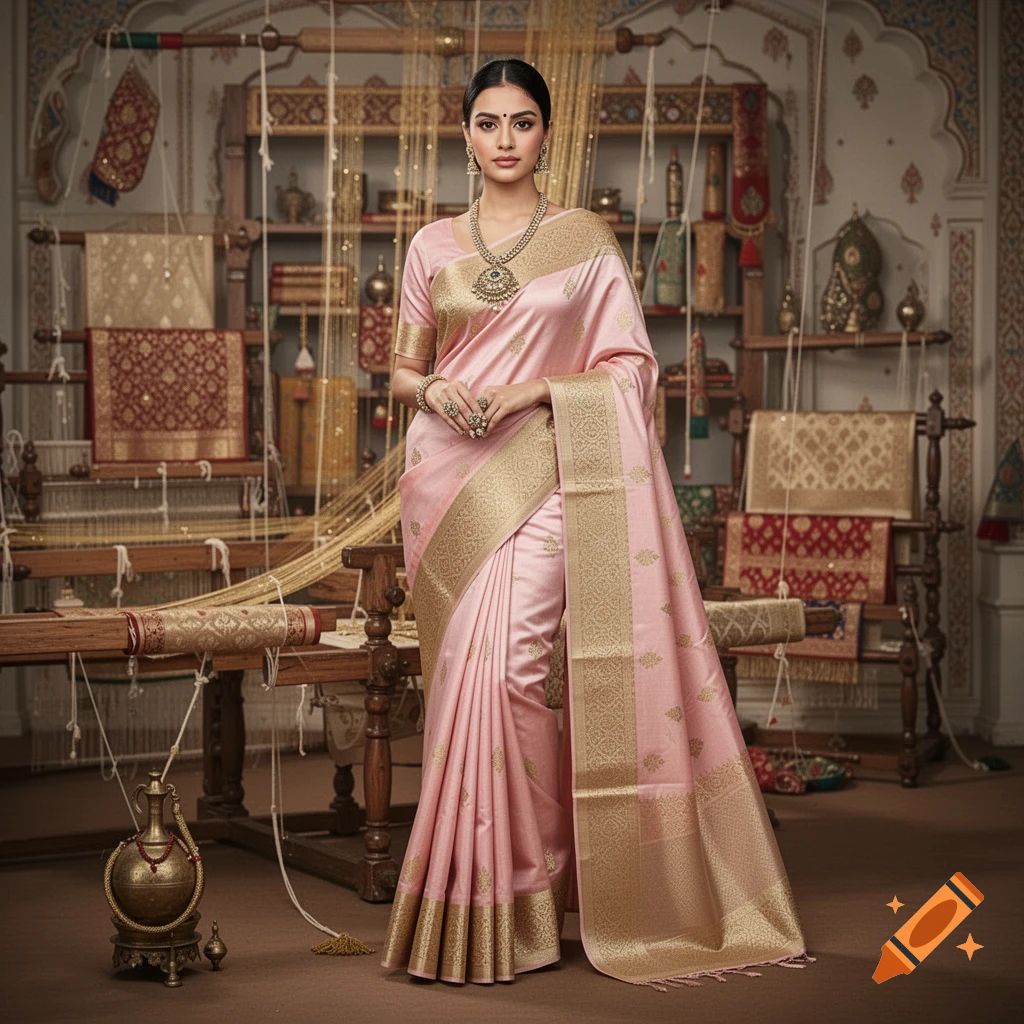
While rooted in deep tradition, Banarasi silk has effortlessly stepped onto global fashion runways. High-fashion designers globally reinvent the fabric, turning traditional yards into avant-garde evening gowns, luxury capes, and contemporary lehengas.
Its unparalleled lustre and royal drape make it a staple for red carpets, royal galas, and celebrity weddings. Modern styling balances the heavy heritage texture of the saree with minimalist blouses, statement modern jewelry, and unconventional silhouettes, showcasing that true heritage never goes out of style.
4. Varieties of Fabric & Variations
Banarasi sarees are broadly classified based on the nature of the silk fabric weave and the structural design styles:
By Fabric Material:
- Katan (Pure Silk): Woven by twisting pure silk threads together, resulting in an exceptionally durable, smooth, and lustrous traditional fabric texture.
- Kora (Organza): A sheer, crisp fabric crafted with tightly twisted silk yarn, adorned with dense Zari borders, ideal for a lightweight aesthetic.
- Georgette: A lightweight, translucent, crinkled silk blend that offers an incredibly fluid and contemporary drape.
- Shattir: The foundational fabric utilized for designing simplified, accessible, and daily-wear contemporary Banarasi variants.
By Weaving Pattern:
- Jangla: Distinguished by extensive all-over dense floral scrolls (Jal) that span across the entirety of the saree body.
- Tanchoi: Uses colorful silk weft threads with no visible Zari to create beautiful, dense paisley and nature designs that feel like a fine painting.
- Vaskat / Cutwork: Produced by cutting away loose hanging threads from the reverse side after completing the artistic loom weave.
5. The Manufacturing Process
Crafting an authentic Banarasi saree is a labor-intensive journey of pure art, typically requiring 3 to 4 weeks (and sometimes months for complex pieces) for a team of 2-3 master artisans.
- Concept Design (Naksha): Artists sketch intricate patterns on graph papers, creating punch cards (Jacquard cards) that act as mechanical templates for the loom.
- Silk Thread Processing: Pure raw silk is cleaned, spun, and dyed by hand into vibrant primary and secondary traditional shades.
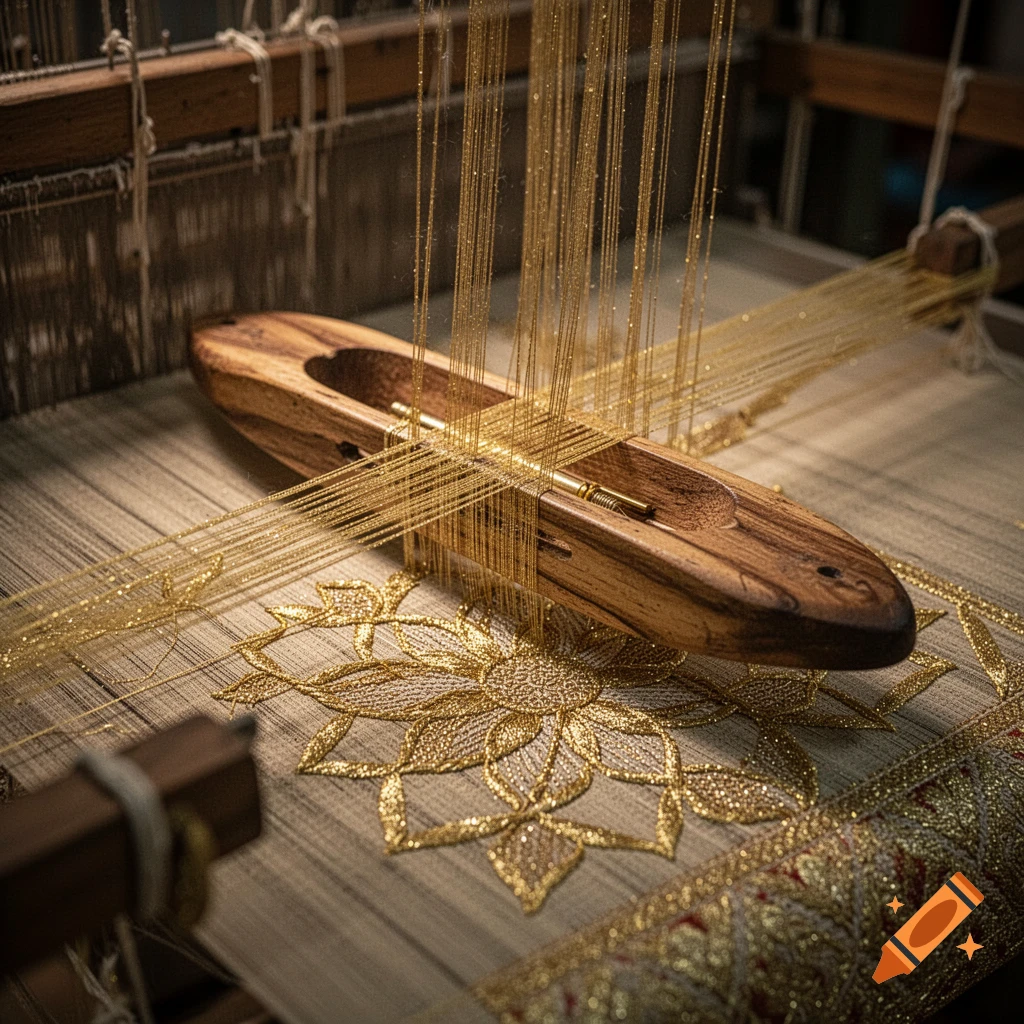
- Zari Preparation: Real silver and gold alloys are drawn into micro-thin wires, wrapped around silk thread, and prepared for weaving.
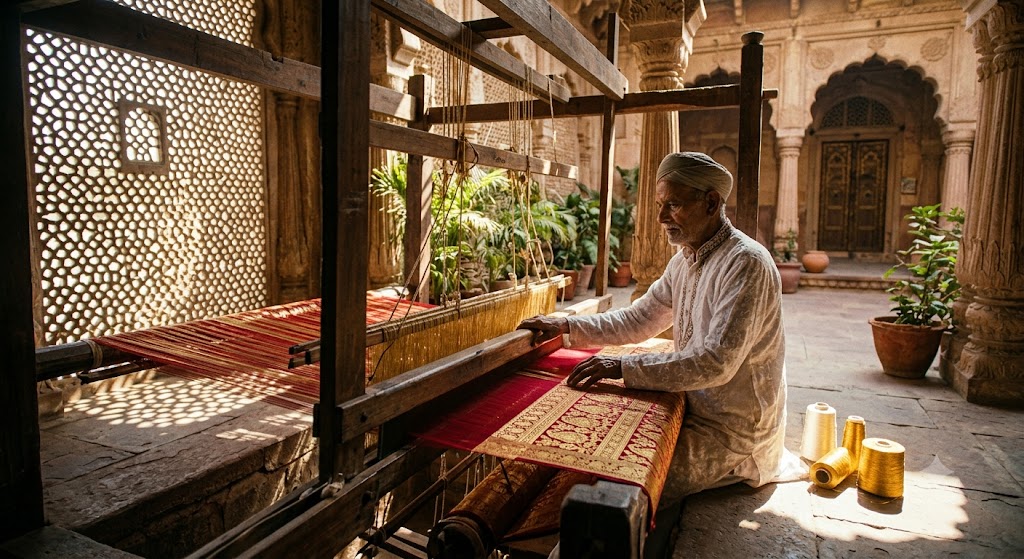
- Loom Setup & Weaving: The punch cards are loaded onto traditional pit looms. The master weaver manipulates hand shuttles back and forth with rhythmic precision, interlacing thousands of warp and weft threads to bring the artwork to life.
6. Geography of Weaving & Retail Hubs in Varanasi
The entire economic ecosystem of Banarasi silk thrives within the ancient neighborhoods of Varanasi. If you are tracking the journey from loom to shop, these are the legendary hot spots:
Weaving Neighborhoods (Where They Are Crafted):
- Madanpura: One of the oldest weaver colonies in Kashi, world-renowned for fine, intricate traditional silk work and classic styling.
- Lallapura: A bustling cluster of master artisans focusing primarily on heavy zari brocades and modern commercial silk variants.
- Sarai Mohana: A heritage village on the outskirts of Varanasi dedicated exclusively to generations of handloom families.
Trading & Retail Centers (Where to Buy):
- Chowk & Thatheri Bazaar: The historic wholesale heart of the textile trade. A labyrinth of tight old lanes lined with multi-generational gaddis (traditional wholesale mattress seating shops).
- Godowlia Market: The lively main retail hub close to the river ghats, perfect for casual shoppers looking for dependable retail boutiques and direct government Emporiums.
- Pili Kothi: The core nerve center for major silk merchants and bulk distributors handling global exports.