Historical Legacy
3,000+ years of continuous life on the banks of the Ganga
Believed to be over 3,000 years old, Varanasi is recognized globally as one of the oldest continuously inhabited cities in human history. Mark Twain famously remarked that Banaras is "older than history, older than tradition, older even than legend, and looks twice as old as all of them put together."
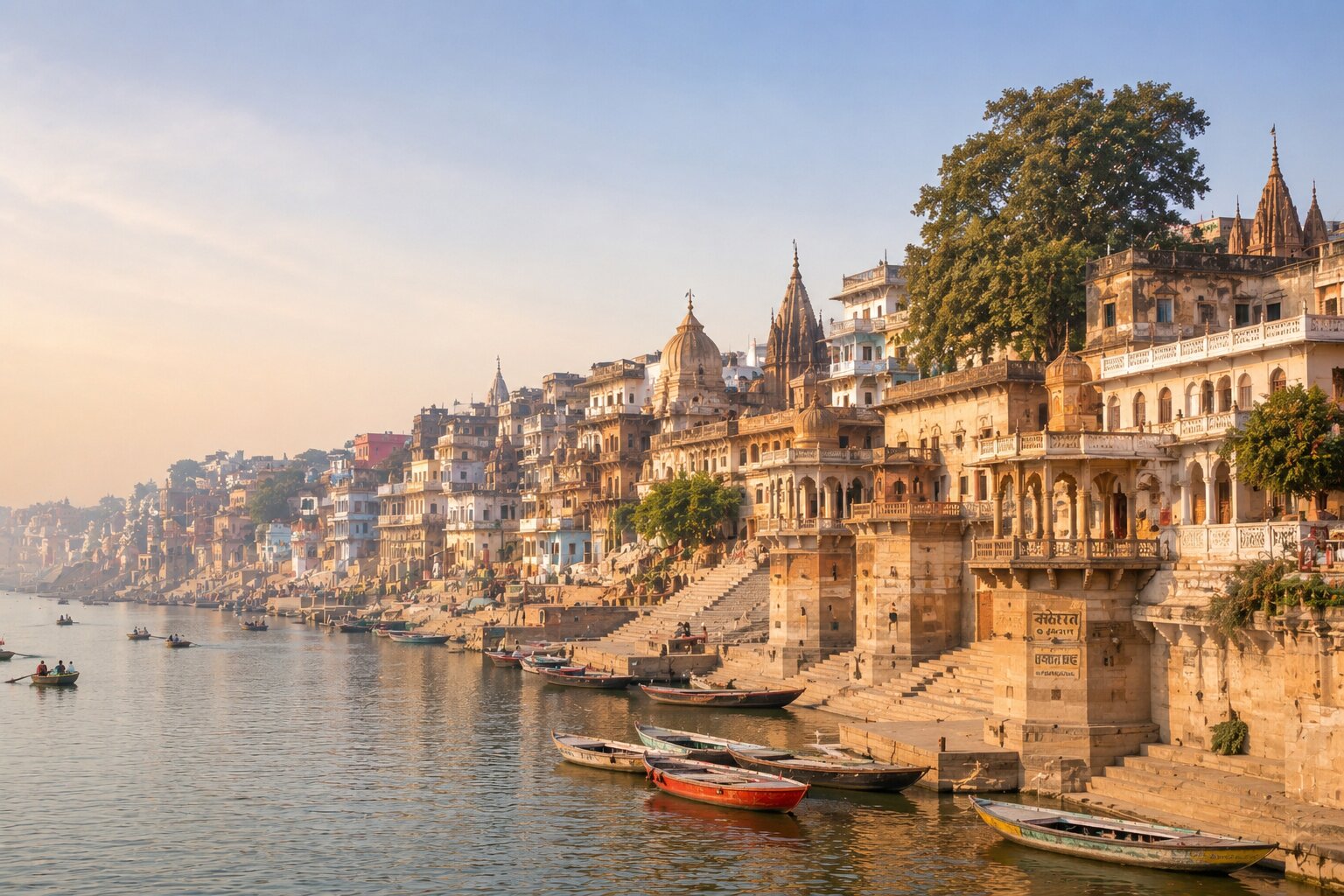
Nestled beautifully along the crescent-shaped banks of the sacred River Ganga, the city has witnessed the rise and fall of countless dynasties, including the Gupta and Mughal empires. It has stood resilient through centuries of cultural shifts, medieval raids, and modern evolution, successfully preserving its original identity as the ultimate cultural crucible of India.
Beyond spirituality, Varanasi has long been a working city of craft and commerce. Narrow lanes near the ghats still hum with the sound of handlooms, brass workshops, and the trade of the famed Banarasi silk sari — a tradition passed down through generations of weaving families.
Religious Core
One of Hinduism's seven sacred cities, and a crossroads of faiths
For millions, Kashi is the terrestrial home of Lord Shiva. According to Hindu cosmic geography, the city rests firmly on Shiva's trident, positioning it safely outside the boundaries of the mundane world. It serves as an epicenter for multi-faith devotion, drawing deep connections to Hinduism, Buddhism, and Jainism alike.
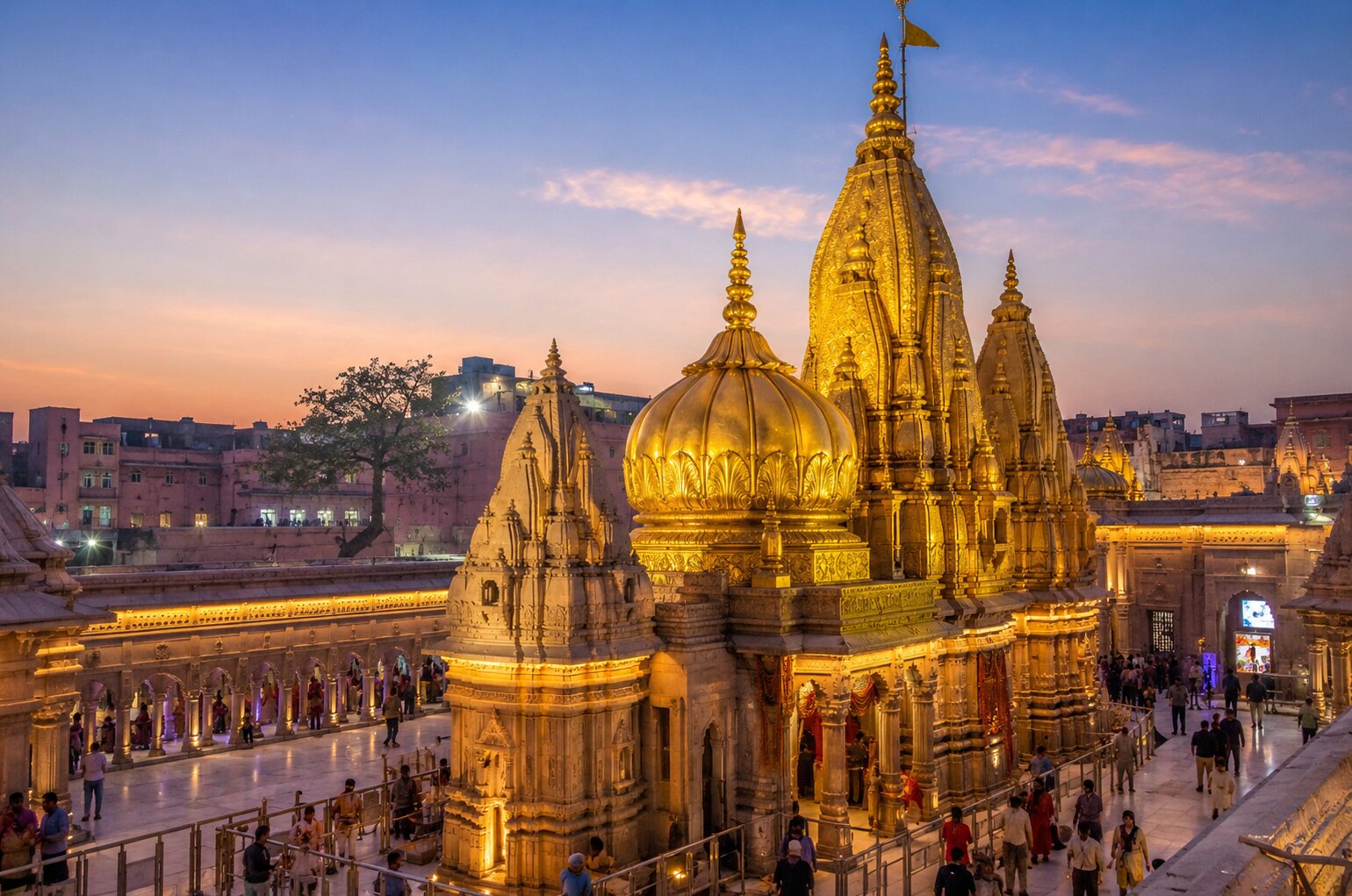
The city's religious landscape is anchored by the historic Kashi Vishwanath Temple (The Golden Temple), housing one of the twelve sacred Jyotirlingas — shrines believed to be self-manifested forms of Shiva. Its gold-plated spires, restored in the 19th century and recently reimagined through the Kashi Vishwanath Corridor project, connect the temple directly to the riverfront.
Just a few kilometers away lies Sarnath, where Lord Buddha turned the Wheel of Dharma by preaching his very first sermon after attaining enlightenment. The Dhamek Stupa still standing there makes Varanasi an eternal beacon of global religious pilgrimage, drawing monks and scholars from across Asia.
Spiritual Awakening
Where the living, the dying, and the seeking share the same riverbank
Beyond structured religion, Kashi represents the ultimate pursuit of Moksha — liberation from the endless cosmic cycle of birth and rebirth. The sacred riverfront, lined with 84 distinct stone Ghats, hosts daily rituals that capture life and eternity unfolding side-by-side.
- Manikarnika Ghat — one of the holiest cremation grounds, where funeral pyres burn continuously, day and night.
- Assi Ghat — a quieter southern ghat popular for sunrise yoga and meditation.
- Dashashwamedh Ghat — the ceremonial heart of the riverfront and site of the nightly Aarti.
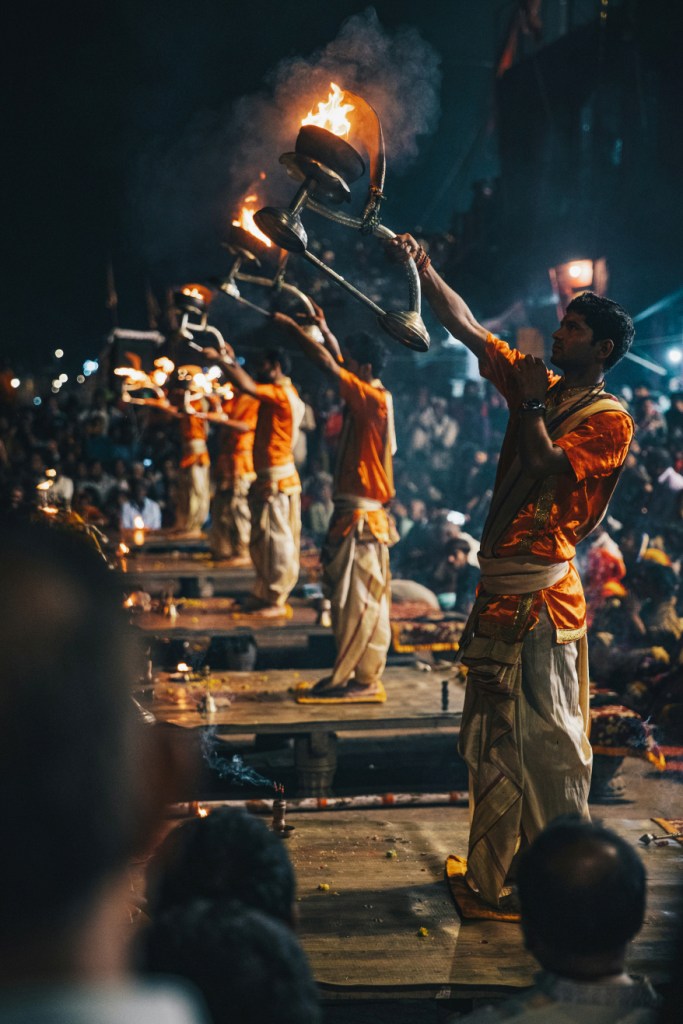
As dusk settles over the city, the air echoes with rhythmic Vedic chants during the grand Ganga Aarti at Dashashwamedh Ghat. Priests in saffron robes perform synchronized movements with multi-tiered brass lamps, while pilgrims and seekers arrive from every corner of the planet to meditate, practice yoga, and experience a profound, quiet stillness amid the vibrant, flickering flames of the riverbank lamps.
Educational Heritage
A city where scripture, science, and the arts have long shared the same streets
Since antiquity, Varanasi has been revered as a supreme center for philosophy, Sanskrit studies, classical music, and traditional medicine (Ayurveda). Great thinkers, reformers, and poets like Adi Shankaracharya, Kabir, and Tulsidas composed their masterworks under the intellectual umbrella of this city.
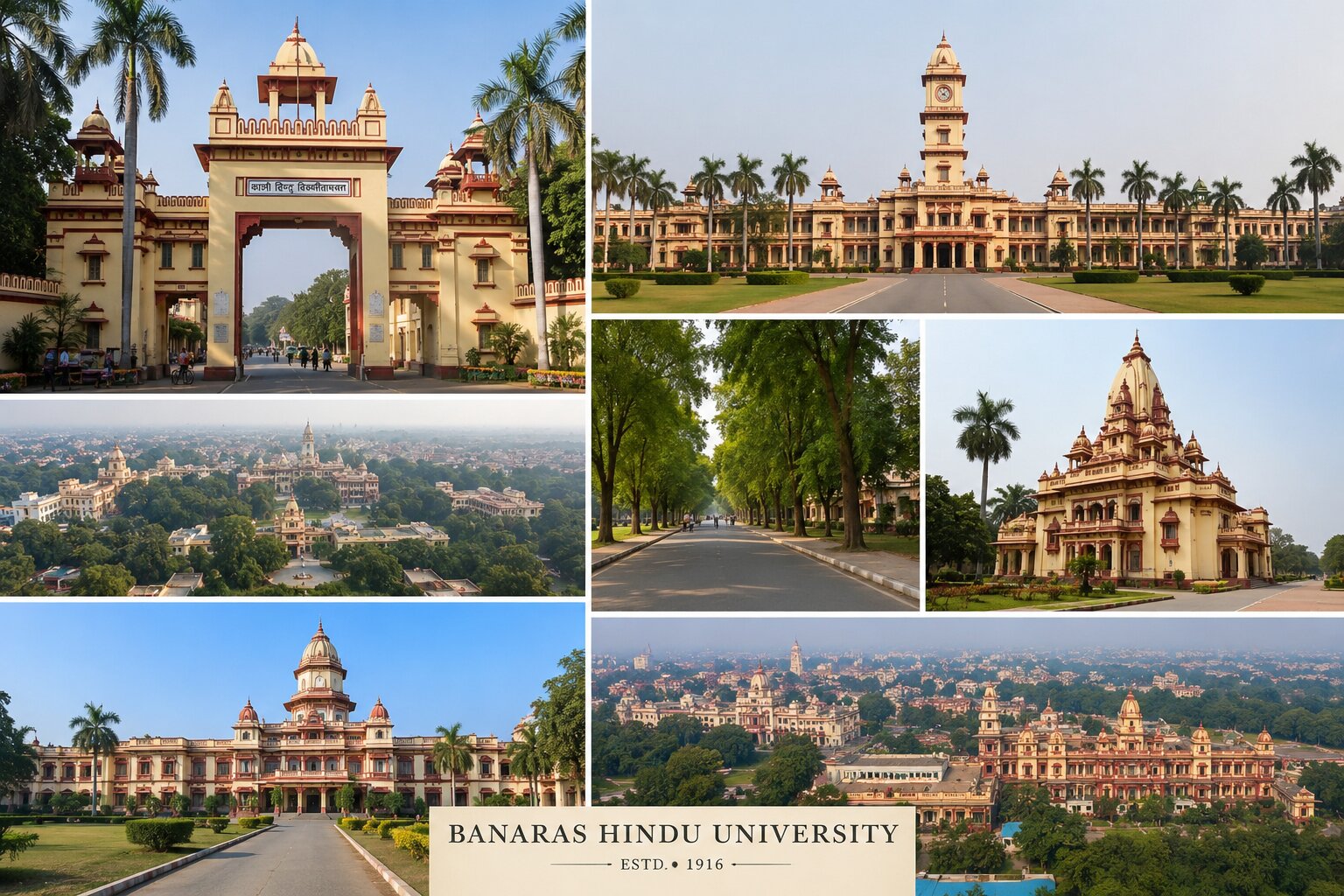
Carrying this historical legacy seamlessly into the modern era is the prestigious Banaras Hindu University (BHU), established by Pandit Madan Mohan Malaviya in 1916. Spread across a sprawling campus, BHU today houses one of Asia's largest residential universities, with faculties spanning Sanskrit studies, Ayurveda, engineering, and the arts.
Alongside traditional Sanskrit Gurukuls and Vedic schools, the city continues to act as a vital intellectual sanctuary, blending timeless ancient insights with contemporary scientific research — and remains a living center for classical music gharanas in sitar, tabla, and vocal traditions.
Banarasi Life & Culture
The unhurried, devotional, deeply social rhythm that locals call "Banarasipan"
Lifestyle
Banarasis wake before sunrise for a dip in the Ganga, and the day slows down again by mid-afternoon for a siesta and a leisurely cup of tea. Life is lived largely outdoors — on the ghats, in courtyards, and in the narrow lanes — with neighbours treated like extended family.
- The "Mast" attitude — unhurried, content, and rarely rattled by anything
- Paan-chewing is a daily ritual, often shared while chatting at a street corner
- Everyone is addressed warmly as "Guru" or "Boss," regardless of age or status
Culture
The city has nurtured classical music and wrestling in equal measure. Mornings at the akhadas (wrestling pits) sit alongside evenings of sitar, tabla, and vocal recitals passed down through family gharanas.
- Ramlila performances re-enact the epic Ramayana each autumn
- Holi is celebrated with ash at Manikarnika Ghat as "Chita Bhasma Holi"
- Kite-flying fills the skies during Makar Sankranti
- The Banarasi paan, wrapped and folded with practiced flair, is a small art form of its own
Language
Hindi is the everyday language of business and administration, but the streets carry the softer, musical cadence of Bhojpuri, the region's mother tongue.
- "Kaisan ba?" — a common Bhojpuri greeting meaning "how are you?"
- "Har Har Mahadev" — an invocation to Shiva, heard everywhere from temples to traffic
- Sanskrit is still taught and spoken in the city's Gurukuls and Sanskrit colleges
- Conversations are peppered with wit and gentle sarcasm, a local trait called "Banarasi tadka"
How to Spend a Day in Kashi
Glimpses of the City
A closer look at everyday life along the ghats
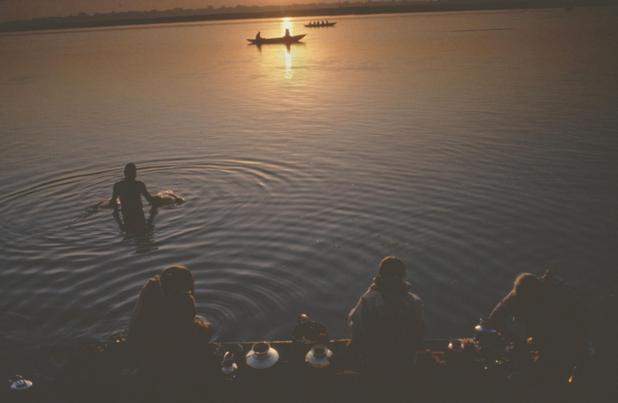
Sunrise Boat Rides
Wooden boats ferry visitors along the ghats at dawn, offering the classic view of the city waking up on the water.
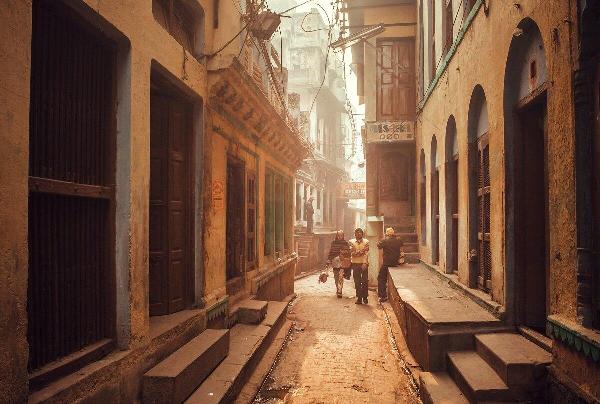
The Old Lanes
Narrow gullies packed with silk shops, sweet stalls, and centuries-old havelis wind through the old city behind the ghats.
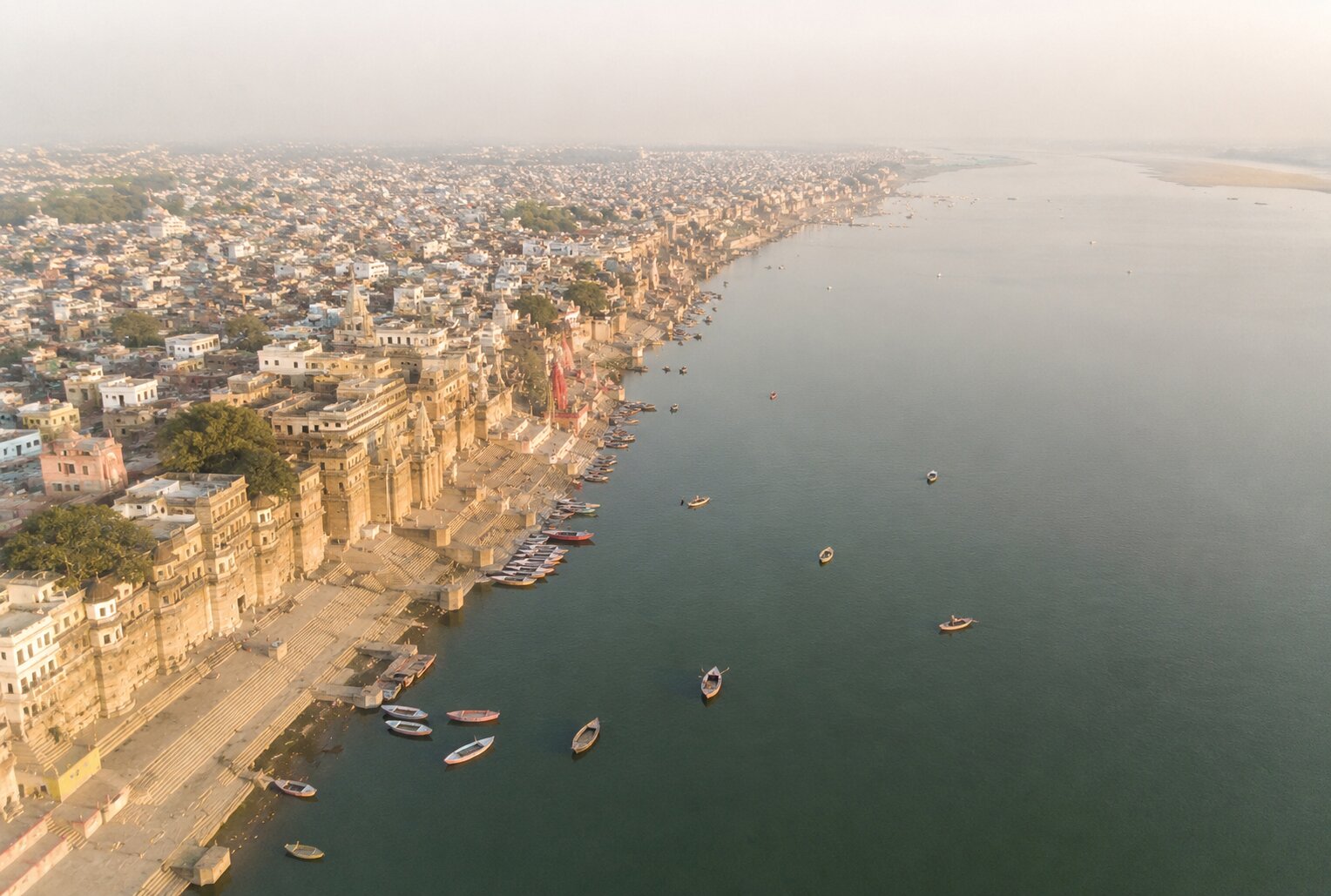
Riverfront Skyline
Temples, palaces, and pilgrim rest-houses stack along the crescent bank, built and rebuilt over hundreds of years.